
Ever wonder who really guides BlackRock's enormous clout? Imagine a few major investors steering the ship while regular folks watch from the sidelines. This post gives you a clear look at how big funds own most of BlackRock’s 635 million shares. You’ll see how a small group of big players can shape the direction of one of the world's largest firms. Stick with us as we explore these eye-opening ownership insights.
Overview of BlackRock’s Ownership Structure

BlackRock has around 635 million shares out there today. Big institutions own about 85% of these, which really shows just how much backing the firm gets from major funds. Meanwhile, regular retail and ETF investors hold roughly 10%, and insiders and directors make up about 3%. Check out the table below for a quick look at the key players.
| Shareholder | Percentage Stake | Approximate Shares |
|---|---|---|
| Vanguard Group | 8.1% | 51 million |
| BlackRock (treasury stock) | 5.0% | 32 million |
| State Street Corp | 4.3% | 27 million |
| Fidelity Investments | 3.3% | 21 million |
| T. Rowe Price | 3.0% | 19 million |
With most shares in the hands of these large institutions, it means that critical decisions are mainly driven by well-established investment groups. This heavy institutional presence makes the influence of smaller retail investors and insiders much less significant when it comes to overall control and governance. Ever notice how a few large players can shape the financial scene?
Institutional Investors and Share Concentration at BlackRock
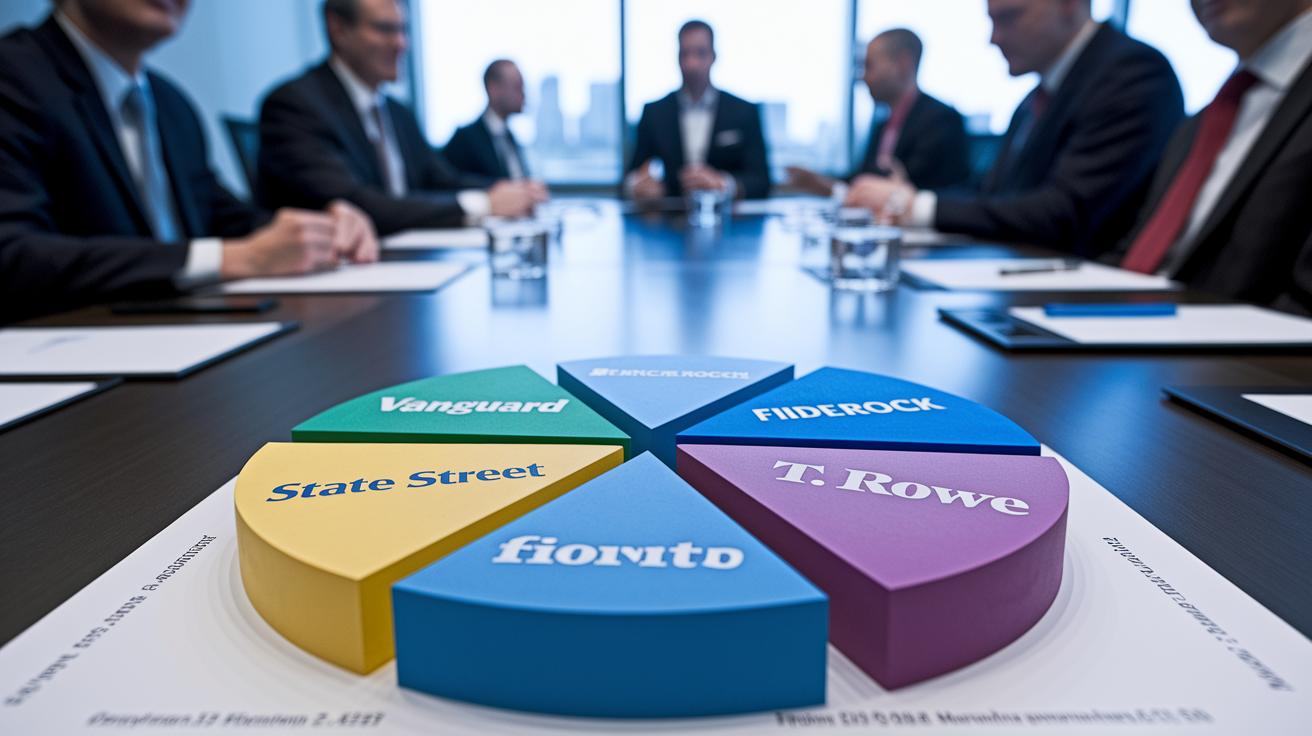
At BlackRock, a few key players hold a lot of sway. The five-firm concentration ratio, or CR5, shows just how much power the top five institutional investors carry. Picture a big pie where these five have the largest slices, much more than you'd typically see in other companies.
- Vanguard Group
- BlackRock (treasury stock)
- State Street Corp
- Fidelity Investments
- T. Rowe Price
This group’s strong backing means they can push through key decisions by voting together at board meetings. It’s like a captain steering a ship through choppy waters, a clear, single direction that leaves smaller investors with less say.
Who owns blackrock: Bold Ownership Insights

At BlackRock, key leaders drive the company forward. Larry Fink, who serves as both CEO and Chair, plays a central role. He works closely with Robert Kapito, the President, and Gary Shedlin, the CFO. Together, they control about 3% of the company’s shares. Think of it like a small anchor that ties their personal success to that of BlackRock, ensuring every decision carries a real personal stake.
The board at BlackRock is made up of 16 directors who steer the firm’s policies and keep an eye on overall performance. They break their work into focused committees. The Audit committee makes sure financial reports and controls are solid. The Risk & Public Policy committee looks out for market risks and regulatory changes, while the Compensation committee keeps executive pay in check. This clear split of responsibilities makes it easier for the company to manage complex market challenges and make balanced choices.
| Committee | Primary Responsibility | Committee Chair |
|---|---|---|
| Audit | Oversee financial reporting and control systems | Chair Name |
| Risk & Public Policy | Manage risk assessments and regulatory strategies | Chair Name |
| Compensation | Review executive pay and incentive structures | Chair Name |
By combining strong executive leadership with a well-organized board, BlackRock builds a foundation of robust governance. This team effort helps ensure that every major decision is made with care and a balanced view of both financial trends and long-term stability.
Insider Ownership and Influential Executive Profiles at BlackRock

Inside BlackRock, the people who run the company own about 3% of all the shares. This small slice shows that they really believe in the company’s long-term future. Even though many decisions come from big institutional investors, insiders buying shares tells us they’re confident in BlackRock’s plans.
Larry Fink, the CEO and Chair, holds around 0.5% of the shares, roughly 3.2 million shares. In 2022, he earned about $28 million, with nearly 65% of that coming as stock awards. This means his pay is closely tied to how well the company does. Robert Kapito, the President, owns about 0.3% or nearly 1.9 million shares, which highlights his key role in leading the firm. The Chief Financial Officer, another important member of the team, has between 0.1% and 0.2% of the shares, showing his part in making important financial decisions.
BlackRock uses these stock holdings to link the leaders’ choices with the future health of the company. By tying a lot of their pay to how the company’s stock performs, the firm makes sure its top executives are really invested in the success of the business.
Regulatory Scrutiny and Ownership Controversies Around BlackRock

The SEC has taken a closer look at BlackRock’s reports, especially their voting records for ESG funds, which are funds focused on environmental, social, and governance issues (that is, criteria used to assess a company’s ethical impact and sustainability practices). Over in the EU, regulators have voiced concerns that BlackRock’s massive asset base might create risks that affect the whole market. There’s a growing worry that such a large presence could lead to lapses in proper oversight.
In 2022, a group of shareholder activists stepped up by opposing a quarter of the executive pay package during a key vote. Their pushback highlights a rising unease among investors about how decisions are made and whether executive rewards truly match the company’s performance.
At the same time, critics continue to question BlackRock’s grip over index funds and its sway in corporate governance. They argue that having a big chunk of the index fund market might tilt the power balance, making it harder for regular shareholders to challenge important choices. This debate keeps the spotlight firmly on how decisions are made and calls for more transparency and balanced governance across the board.
Comparison of BlackRock’s Ownership with Other Industry Leaders

When you look at BlackRock’s ownership, you see a few interesting twists compared to its peers. For instance, big names like Vanguard and State Street own significant chunks of BlackRock, Vanguard holds about 7.5% and State Street around 4.3%. And here’s the kicker: BlackRock also owns roughly 6.5% of Vanguard. This back-and-forth sharing creates a kind of web among these financial giants, where power isn’t held by one firm alone but spread across several major players.
Meanwhile, Fidelity’s stake in BlackRock is about 3.2%, a smaller share compared to the cross-holdings we see with the other firms. It shows that while all these companies invest in one another, the balance of power isn’t always even.
| Company | Stake in BlackRock |
|---|---|
| Vanguard Group | 7.5% |
| State Street Corp | 4.3% |
| Fidelity Investments | 3.2% |
These mutual stakes influence everything from voting at shareholder meetings to strategic moves across the market. It’s like each firm is a part of a larger team, working together in some ways while still looking out for their own interests. Ever notice how teamwork can sometimes blur the lines between collaboration and competition? That’s exactly what we see here, and it hints at both stability and potential challenges when it comes to independent decision-making.
Market Implications of BlackRock’s Ownership Concentration

BlackRock holds about 15% of the voting power in the S&P 500 companies. This means the firm can strongly influence decisions on company policies and leadership choices. Think of it as owning a big slice of the voting pie, each vote can shape key decisions, like choosing executives or steering major strategic moves. Imagine a situation where one vote sways a critical policy change, setting off a chain reaction throughout various market sectors.
When large institutional investors together hold a big chunk of shares, it's known as concentrated ownership. In these cases, a few key players might coordinate their votes, which can increase market unpredictability and put pressure on company management. This kind of concentration raises questions about fund management and whether short-term gains might be placed above the long-term stability of the market.
Final Words
In the action, this article broke down BlackRock’s ownership structure, highlighting shareholder distributions and the role of institutional investors, insiders, and executive leadership. We walked through stakeholder percentages, discussed concentrated shareholding's market impact, and examined regulatory and ownership controversies. Every piece of data we shared helps you get a clearer picture of who owns BlackRock. It’s a complex yet fascinating look into one of the investment leader's inner workings, leaving us with optimism about future market insights.
FAQ
Who owns Vanguard and BlackRock?
The ownership structures for Vanguard and BlackRock vary. Vanguard is owned by its investors through its funds, while BlackRock is publicly traded, with major stakes held by institutional and retail shareholders.
What is Larry Fink’s net worth and role at BlackRock?
Larry Fink, BlackRock’s CEO and chair, is known for commanding significant wealth counted in millions. His leadership drives the company’s strategic direction and overall governance.
Who owns BlackRock stock, and who holds the majority?
BlackRock stock is public, with roughly 85% owned by institutional investors like Vanguard and State Street. No single entity holds a majority, ensuring a diverse array of stakeholders influence the firm.
What does BlackRock own and how wide is its asset portfolio?
BlackRock manages a broad array of assets across many sectors. It invests in numerous companies through its diversified portfolios but does not directly own companies in a traditional sense.
Who are the key founders and executive leaders of BlackRock?
BlackRock was founded by a team led by Larry Fink, with vital contributions from Susan Wagner and Robert S. Kapito. These leaders laid the groundwork for the firm’s growth and industry influence.
Who are some notable figures associated with BlackRock and its partners?
Notable figures include Larry Fink, Susan Wagner, and Robert S. Kapito. Influential industry figures like Warren Buffett, Mark K. Wiedman, and Jamie Dimon also feature in discussions of the firm’s extensive network.
Does BlackRock own Pfizer?
BlackRock does not own Pfizer in a controlling sense. It holds shares as part of its broad investment portfolio, similar to its involvement in various other publicly traded companies.


