
Ever wonder if your mining gear might be costing you more than it's earning? This little guide walks you through five ASIC miners that could help you boost your earnings and cut costs. We'll break down key details like hashrate (the speed at which the miner processes data), power use, and noise levels so you can pick the one that fits your budget and goals. In a world where every extra terahash (a measure of mining speed) counts, choosing the right miner can turn those small daily gains into a real boost in your profits. Read on to see which models shine.
Top ASIC Miners for Bitcoin in 2025: Specs and Pricing
When you’re picking an ASIC miner, it’s smart to look at a few key things: how fast it mines (hashrate, which tells you how many mining calculations it can do), how much power it uses, how energy efficient it is (energy efficiency means lower electricity bills), its price, and even how loud it gets. All these details help you see not only how powerful the miner is but also what it will cost you to run day-to-day. Fun fact: a miner cooled by water can be so quiet that a noisy mining setup might actually feel as peaceful as a home office.
Below is a handy comparison of six top models side by side. Use it to quickly decide which one fits your goals and budget best.
| Model | Hashrate (TH/s) | Power (W) | Efficiency (J/TH) | Price ($) | Noise (dB) |
|---|---|---|---|---|---|
| Bitmain Antminer S21e XP Hyd 3U | 860 | 11,180 | 13 | >17,000 | 50 |
| Bitmain Antminer S21 XP+ Hyd | 500 | 5,500 | 11 | 12,700 | 50 |
| Auradine Teraflux AH3880 | 600 | 8,700 | 14.5 | 7,800 | 35 |
| Bitdeer SealMiner A2 Pro Hyd | 500 | 7,450 | 14.9 | 3,958 | 50 |
| MicroBT WhatsMiner M66S++ | 356 | 5,518 | 15.5 | 8,660 | 75 |
| Bitmain Antminer S21 Pro | 234 | 3,510 | 15 | 23.87 per TH | N/A |
The Bitmain Antminer S21 XP+ Hyd stands out with an energy efficiency of just 11 joules per terahash, which means you win if you’re aiming to keep power costs low and profits high over time. On the other hand, if you're working with a tight budget, the Bitdeer SealMiner A2 Pro Hyd makes a lot of sense. It gives good performance without a steep price tag. So, think about what's most important for your mining setup, whether it's trimming those daily power bills or lowering your initial spend, and you'll be better prepared to pick the miner that boosts your bitcoin earnings.
Bitcoin ASIC Hardware: Performance Metrics and Efficiency
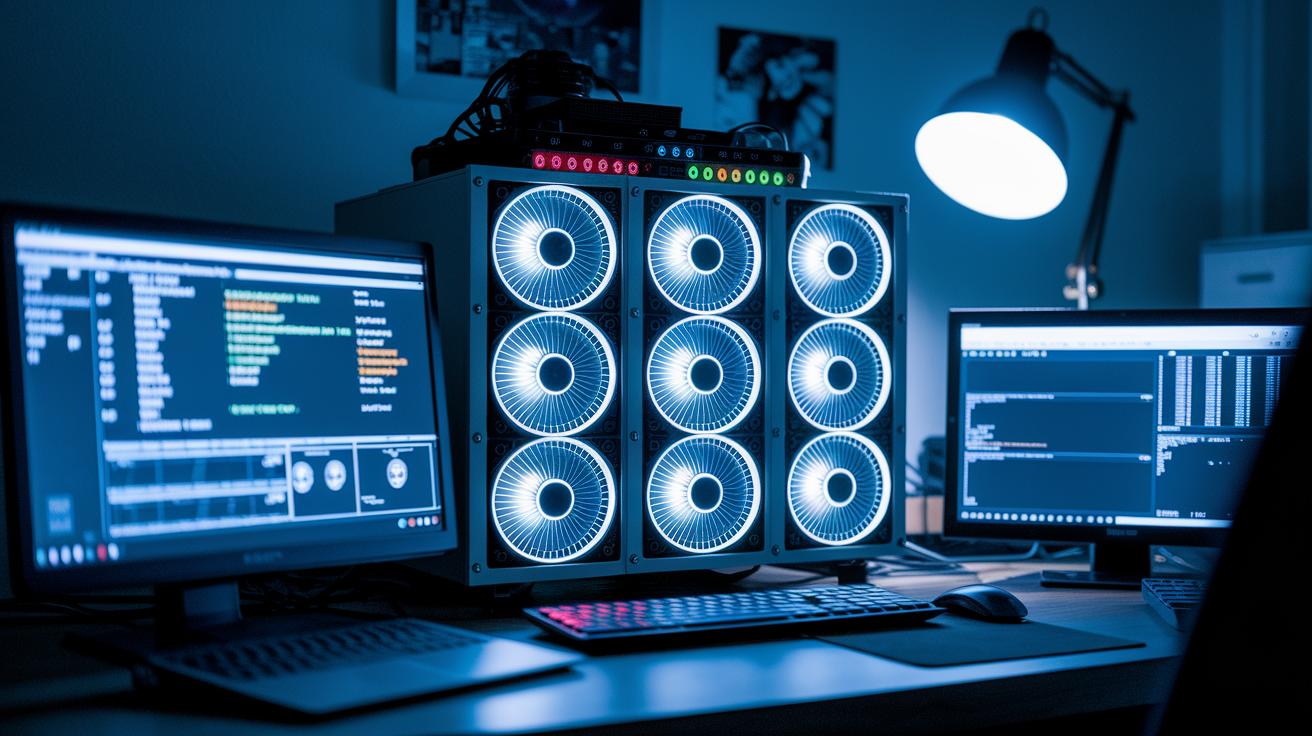
When looking at ASIC miners, focus on key numbers like hashrate (how fast the miner processes data), efficiency (Joules per Terahash, which tells you how much energy is needed for each unit of work), power draw, and noise levels. Adding in details about the cooling system can really sharpen your view. For example, a miner with liquid cooling might run about 20% quieter than one using air, which can be a big advantage in warmer settings.
- Hashrate (TH/s): The basic speed at which the miner works.
- Efficiency (J/TH): The energy used for each Terahash of work.
- Power draw (W): How much electricity the miner uses.
- Noise level (dB): The loudness, which is important for where you place your setup.
- Cooling type (air, hydro, immersion): This affects how steady and reliable the miner’s performance can be.
It’s a good idea to pick a miner that suits your specific setup. If you’re running a home operation, you might prefer a quieter, lower-output miner with solid cooling. On the other hand, larger setups can often handle higher energy consumption in exchange for faster speeds.
Bitcoin ASIC Mining Profitability and Cost Analysis
When you're starting with bitcoin mining, keeping an eye on costs is a must. It means looking at both the upfront price of the miner and the everyday power and maintenance bills. This way, you can figure out which miner gives you the best bang for your buck while keeping expenses low.
Here are a few key points to consider:
- Initial hardware cost (the money you pay to buy the miner)
- Hashrate per dollar (how fast you mine compared to your investment)
- Electricity rate ($/kWh), which tells you how much energy costs
- Efficiency (J/TH), explaining how much power the miner uses for each terahash
- Network difficulty and block reward, meaning how hard it is to find a block and how much you earn
- Uptime and maintenance expenses, which cover how long the miner runs and how much upkeep it needs
Imagine you come across a miner costing around $17,000 with a cost per terahash of about $23.87 that uses 11,180 watts. With electricity priced at $0.05 per kilowatt-hour, the miner runs you roughly $13.42 in power costs each day. This daily power expense plays a big role in your overall return on investment.
This straightforward check helps you compare the hardware price with your operating costs. It’s a simple way to decide if the miner fits your mining plan. Ever notice how even small numbers like these can make a big difference in your profits?
Innovations in Bitcoin ASIC Mining Technology
New hardware is shaking up bitcoin ASIC mining by letting miners earn more while spending less. These cutting-edge rigs now use hydro cooling to lower noise to about 50 dB, roughly as quiet as a hushed room, and they also consume fewer joules per terahash, which means they cost less to run over time.
Immersion-cooled designs add another layer of reliability, keeping systems cool and steady during tough, nonstop mining sessions. Manufacturers are also stepping up their game by integrating top-notch power-management chips that trim energy use, and by offering modular firmware support. This gives users more say in how their rigs perform, whether they stick with the stock settings or opt for trusted third-party tweaks.
Even the ASIC chip fabrication is getting a boost through smaller node sizes, setting new standards for both reliability and top performance.
- Hydro cooling systems
- Immersion bath designs
- Advanced power-management chips
- Modular firmware support
- Enhanced ASIC chip fabrication (smaller node sizes)
Selecting and Maintaining Your Bitcoin ASIC Miner
When you're picking out your mining rig, start by checking the seller’s reputation and making sure the device comes with a solid warranty. This step is key, especially when you see models like the S19j Pro or S19k Pro on the secondary market. You also want to make sure the firmware, the little software inside that helps run the device, is current and works well with your system. Staying up-to-date here can really boost both performance and security.
It’s a good idea to watch your rig’s power use and temperature every day. This helps keep everything running smoothly and safely. And hey, a regular cleaning of dust and fans can help your setup last much longer. Plus, having spare parts like extra fans and power supplies on hand means you’re ready if something unexpected pops up. Finally, protect your network by using routers dedicated only to mining, which helps keep any unwanted guests at bay.
- Verify the seller’s reputation and warranty
- Confirm firmware is current, compatible, and updated regularly
- Monitor power use and temperature daily
- Set up a routine for cleaning dust and fans
- Keep spare fans and power supplies nearby
- Secure your network with mining-dedicated routers
When your hardware no longer gives you enough bang for your buck or maintenance starts costing more than the performance gains, it might be time to consider an upgrade.
Future Trends in Bitcoin ASIC Mining Hardware
Exciting new mining machines are on the way. Next year, models like the Antminer S21 XP+ Hyd and SealMiner A2 promise big improvements for large-scale operations. They’re built with advanced liquid cooling methods, like hydro and immersion, to keep things running smoothly. Manufacturers are pushing for better energy use, aiming to use less than 12 Joules per terahash by 2026, which is key as tougher network challenges can lower how much you earn.
Market trends tell us something interesting too. Good hashprice conditions are fueling more sales of older models like the S19 on the secondary market. This hints that miners focusing on special tasks and different algorithms might soon be in demand.
| Trend | What It Means |
|---|---|
| Better Energy Efficiency | Targeting under 12 J/TH by 2026 for improved performance |
| Advanced Cooling Methods | Increased use of immersion and hydro cooling systems |
| Network Challenges | Tougher network conditions affecting hardware returns |
| Specialized Hardware | A move towards miners that work for different, niche algorithms |
Keep an eye on firmware updates and market price signals, because these cues will show when performance and profits are set to make a real jump. It’s like watching the first signs of spring, slow but promising changes that lead to exciting breakthroughs in ASIC mining technology.
Final Words
In the action, we reviewed top models based on specs like hashrate, power draw, efficiency, pricing, and noise. We broke down performance metrics, profitability factors, and emerging innovations that make a difference in mining operations.
Our analysis shows that even with varying features, whether it’s advanced cooling systems or solid ROI, the best ASIC miners for bitcoin remain at the forefront of delivering reliable, cost-effective solutions. Stay optimistic and keep your eye on market signals as you plan your next move.
FAQ
What are the best ASIC miners for Bitcoin on Reddit and for beginners?
The best ASIC miners for Bitcoin, as discussed on Reddit and by beginners, offer a mix of strong hash rate, power efficiency, and low noise. Bitmain and MicroBT products are often favored for their balanced performance.
How profitable are ASIC miners?
ASIC miner profitability depends on factors like hash rate, energy efficiency, electricity costs, and Bitcoin’s current price, with highly efficient models generally delivering better daily returns.
What are the best crypto miners for mining at home?
The best crypto miners for home use are those that combine quiet operation with moderate power requirements. Hydro-cooled designs and models with lower noise levels suit residential environments well.
What can you tell me about Bitmain?
Bitmain is a major ASIC manufacturer known for its advanced mining devices. Their Antminer range consistently delivers high performance and energy efficiency, making them popular with both beginners and professionals.
What is the Bitmain Antminer S21 Hyd 335T?
The Bitmain Antminer S21 Hyd 335T is a high-performance ASIC miner that utilizes hydro cooling for efficient energy use and lower noise, offering robust hash rate capabilities for intensive Bitcoin mining.
What are ASIC miner prices?
ASIC miner prices can vary widely based on performance and features, ranging from a few thousand dollars for budget-friendly options to over $17,000 for top-tier models with advanced cooling and efficiency.
What is the Bitmain Antminer S21 XP Hydro?
The Bitmain Antminer S21 XP Hydro features hydro cooling technology, which improves efficiency and keeps noise low. It is designed for rigorous Bitcoin mining with competitive power consumption and solid performance specifications.
Which is the best ASIC miner for Bitcoin?
The best ASIC miner for Bitcoin depends on individual priorities like efficiency, cost, and noise restrictions. Many users recommend Bitmain and MicroBT options, which consistently rank high in performance tests and energy metrics.
Can I mine Bitcoin with ASICs?
Mining Bitcoin with ASICs is not only possible but common due to their specialized design for high-speed mining, delivering superior performance and efficiency compared to other mining hardware options.
Who is the most successful Bitcoin miner?
The most successful Bitcoin miner is often a large-scale mining pool or company that leverages advanced hardware and large operations, measuring success through high hash rates and consistent performance in network rewards.


