
Ever wondered if crypto mining is legal? Many areas openly permit it, allowing miners to earn steady rewards by following clear rules. Even in regions with stricter standards, simple checks help ensure transactions remain safe.
In this article, we explore the legal paths for crypto mining. It’s not a wild risk but a structured activity that offers real benefits, if you stick to the guidelines. Stay with us to learn how these legal choices can turn into promising opportunities.
Crypto Mining Legality Overview: Good News Ahead

Crypto mining is legal in many areas, and that’s great news for many people. Bitcoin mining uses a Proof-of-Work system. In simple terms, miners change a number called a nonce until they find the right block hash, which keeps transactions safe. Back in April 2024, miners made 3.125 BTC plus extra fees for each block they solved. This steady reward shows that the process can be reliable, even though there are rules to follow.
There are three main legal scenarios for crypto mining. In places like the United States, Canada, Germany, Australia, and El Salvador, mining is allowed as long as operators stick to tax, environmental, and registration rules. Ever notice how even complex tech can start with something simple? A miner in Texas might begin with basic calculations, setting the stage for much bigger security checks.
Some countries, like Russia, Iran, and Kazakhstan, only allow mining with special licenses or in specific zones. And then there are countries such as China, Algeria, Nepal, and Bangladesh where crypto mining is not allowed at all because of concerns about high energy use and other impacts. Even though the rules differ from place to place, many big economies offer a welcoming environment for crypto mining.
U.S. Crypto Mining Laws and Regulations

Federal law lets you mine crypto, and the IRS treats any coins you produce as taxable income, just like getting a paycheck from a regular job. So, every coin you mine counts as income when tax time rolls around. Even if you’re mining from home, you need to follow local building codes, energy rules, and sometimes register your business if your setup grows big.
In Texas, miners love the state for its low-cost energy, which makes it ideal for large operations. But here’s a fun twist: imagine setting up high-powered rigs in a friendly Texas neighborhood, only to have your neighbors call out about constant noise early in the morning. That’s why some local authorities are rethinking their rules.
California takes a tougher stance. Miners there must complete strict environmental checks, secure zoning approvals, and provide detailed reports on greenhouse-gas emissions. These measures help keep local communities safe from the downsides of heavy energy use.
New York follows a similar path by requiring mining companies to get permits under the Climate Leadership and Community Protection Act. They also need to provide detailed reports on how much power they’re using, making sure that these operations don’t overstep.
One big development on the horizon is a proposed federal tax, a 30% excise tax on the electricity used by mining operations, which could really change the game for profits across the nation. In short, while the federal law gives a wide berth to crypto mining, the state-by-state rules make the whole process a bit of a maze.
Global Crypto Mining Legal Framework Comparison

Crypto mining rules change a lot from country to country, which really matters when you're trying to figure out if it's legal. Take India, for example. There isn’t a clear ban on mining, but past banking restrictions have left a bit of a cloudy picture for miners. In Russia, mining is allowed if you follow some clear rules: you’ll need a license from the central bank, complete an environmental review, and stick to specific zone guidelines. So, while mining is legal there, it comes with important strings attached.
Over in France, their approach follows the EU Commission’s advice. The aim is to reduce tax breaks and keep energy use in check. Meanwhile, Australia and New Zealand are much more welcoming. In these countries, miners just need to adhere to normal business and environmental laws without any extra hurdles. Canada is also friendly on a national level, though some provinces like Quebec and Ontario have tossed in extra rules about electricity use.
On the flip side, China and Bangladesh have taken firm stands by outright banning crypto mining. They worry about putting too much strain on their electrical grids and are concerned about the impacts of decentralized currencies. Every nation seems to be balancing the push for new technology with the challenge of high energy use and other risks that come with mining.
| Country | Status | Key Requirement |
|---|---|---|
| United States | Legal | IRS tax, state permits |
| Russia | Conditional | Central bank license |
| India | Ambiguous | No explicit law |
| China | Banned | None |
| Germany | Legal | Business registration |
| Australia | Legal | Environmental compliance |
Overall, the legal rules for crypto mining around the globe form a patchwork of different policies. Some countries set up clear rules and approval processes, while others choose to ban mining outright when they worry about high energy use. It’s a fascinating mix, some nations welcome crypto mining with open arms, and others put brakes on it to keep infrastructure and sustainability in check.
Crypto Mining Licensing and Compliance

Crypto mining operators all over the world face different rules and checks, and these rules change from place to place.
In places like Russia, Iran, and Kazakhstan, you need special permits from the government or central bank, plus studies to show the mining won't harm the environment. It’s a bit like checking your car before a long trip, making sure everything is in order helps you avoid surprises later on.
Over in the European Union, companies follow new guidelines that focus on saving energy and cutting down on pollution. This means the mining operations are designed to be kinder to the planet.
In the United States, the process includes a few extra steps. For instance:
- Many states require you to register your business.
- Equipment must pass safety checks, kind of like ensuring every bolt on a machine is secure.
- There are rules in place to control noise so it doesn’t disturb nearby areas.
- A 2024 Supreme Court decision, which involved NVIDIA, stressed that tech companies must share information when they sell mining gear.
All these rules and checks help build trust in crypto mining by showing that companies are following clear and strict guidelines.
Taxation in Crypto Mining Operations
In the United States, every coin you mine is treated as ordinary income based on its market value at the time you produce it. For example, if you mine a coin worth $5,000, then that $5,000 is added to your taxable income, as if you got paid a regular paycheck.
The IRS handles mined coins just like you would any other earnings. For more details on how they do this, check out their explanation of net investment income tax.
Lawmakers are also looking at a proposed federal excise tax on the electricity used by mining operations. One miner in Texas mentioned that if they charged 30% on energy costs, it could take away almost a third of his earnings on a busy day.
For a broader look at how different countries deal with tax and energy rules for crypto mining, see the Global Crypto Mining Legal Framework Comparison section.
Environmental and Energy Regulations for Crypto Mining

Crypto mining uses a lot of power from specialized machines, and this heavy demand can really strain local electricity grids. Think of it like a small town drawing power from one big plant. Operators must follow rules that require clear agreements with power providers, setting strict limits on how much energy they can use and detailing the environmental impact of their operations. It’s like ticking off every item on a checklist to make sure every watt is tracked.
Regulators are pushing miners to move away from fossil fuels. In areas that rely on coal, the EU Commission is cutting back on tax breaks and now insists on using more renewable energy. Imagine a miner swapping out an old, clunky setup for one fitted with solar panels to follow the new rules. This shift is meant to reduce harmful emissions while promoting a greener way to power digital projects.
Different states have varying rules too. In places like California and New York, miners have to submit detailed reports on their energy use to meet strict greenhouse-gas standards. In contrast, Texas has more relaxed regulations, though even there, local noise laws can affect mining operations. By juggling these diverse regional rules, the industry works to balance energy needs with environmental care, supporting growth while protecting our planet.
Home and Mobile Crypto Mining Legal Considerations

Mining crypto at home is generally allowed if you stick to local zoning rules, power-connection codes, and noise ordinances. When you set up your mining rig, make sure your space meets essential building and safety codes. Think of it like preparing a cozy, well-organized workshop with proper ventilation and cooling to reduce any fire risks.
A lot of hobbyists find home mining a practical choice once the details are sorted out. For example, handling noise is key, if your rig gets too noisy, neighbors might start complaining. I once heard about someone in Texas who had to invest in soundproofing just to keep everyone happy. Sometimes, simply repositioning your equipment or choosing a quieter setup can be all you need.
Mobile-app miners deal with a lighter set of rules, but they’ve still got to watch out for privacy and cybersecurity. Avoid running unauthorized background processes that could mess with user privacy or trigger security alerts. Picture a user noticing odd mobile activity; that’s a clear hint that your app might be crossing a line, so safeguarding user data is a must.
In the end, keeping your mining operation legal and safe is all about following local ordinances and safety standards. By double-checking that your setup follows power codes, noise rules, and cybersecurity guidelines, both home and mobile miners can run their operations smoothly while protecting their equipment and community.
Final Words
In the action, we explored the various faces of crypto mining legal worldwide. We've broken down global, U.S., and local rules, covering everything from licensing and tax implications to environmental standards and home-based operations. Each section offered clear pathways for understanding how and where mining activities can meet regulatory requirements. This overview leaves you with a solid grasp of the current legal framework and a positive outlook on informed, strategic crypto mining practices. Keep digging into these trends and feel empowered to make smart investment choices.
FAQ
Is Bitcoin mining profitable?
Bitcoin mining profitability depends on energy costs, hardware efficiency, and market conditions. Miners earn income by processing transactions and receiving Bitcoin rewards, but profitability can fluctuate over time.
Is crypto mining legal in the US and can you legally mine crypto?
Crypto mining in the US is fully legal if you adhere to tax rules, zoning restrictions, and environmental requirements. Both home miners and large-scale operations must follow local and state guidelines.
What is crypto mining?
Crypto mining is the process of using computer power to validate digital transactions. By solving complex math problems, miners secure the blockchain and earn new cryptocurrency as rewards.
Why is crypto mining noisy?
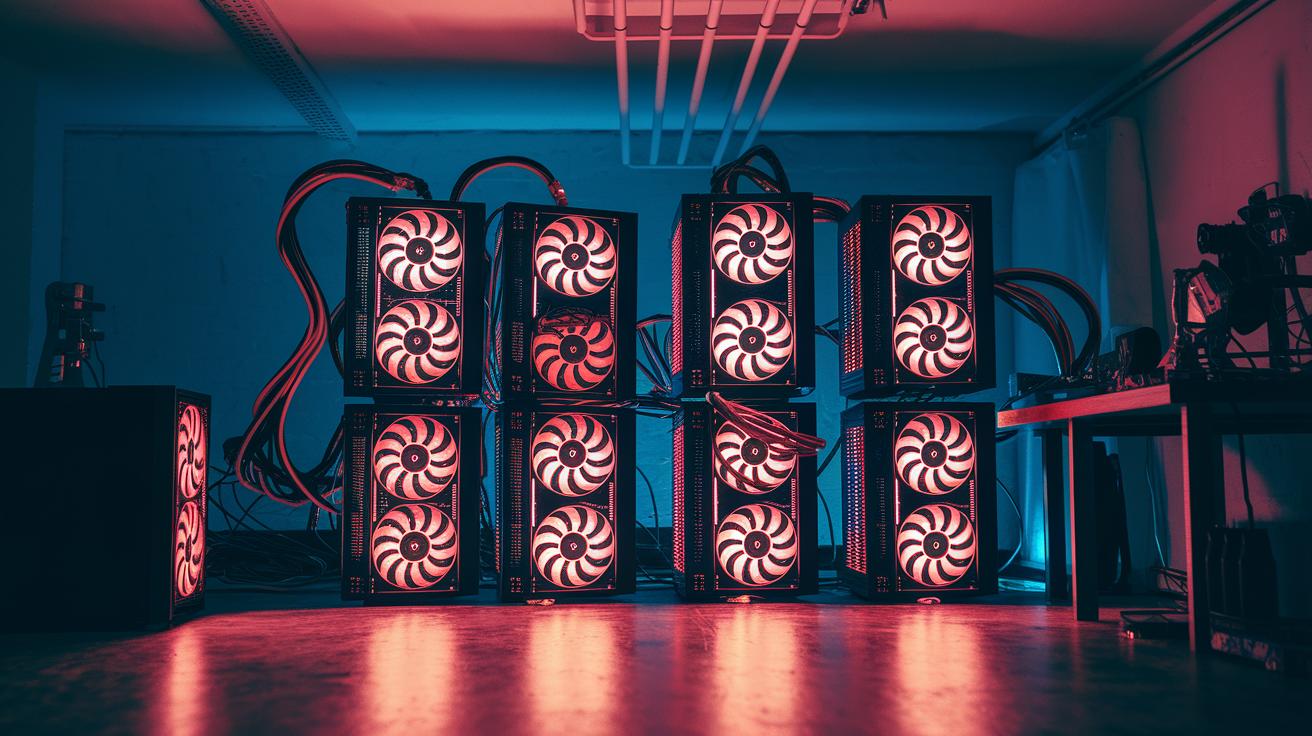
Crypto mining is noisy because the machines use powerful fans and cooling systems to keep hardware from overheating. Continuous high-speed operations produce a steady hum during the mining process.
How does Bitcoin mining work?
Bitcoin mining works by using a Proof-of-Work system where miners adjust a nonce until a valid hash is found. Successfully mining a block yields Bitcoin rewards along with transaction fees.
What is Bitcoin mining software?
Bitcoin mining software connects mining hardware to the Bitcoin network and mining pools. It manages transaction processing and workload distribution to maximize mining efficiency.
What are crypto mining sites?
Crypto mining sites are locations—either physical facilities or virtual setups—where mining operations take place. They provide the necessary power, cooling, and security for running mining hardware.
What is a Bitcoin mining machine?
A Bitcoin mining machine is specialized hardware, often an ASIC device, designed to solve complex cryptographic puzzles. It optimizes power use and processing speed to mine Bitcoin effectively.
How long does it take to mine $1 of Bitcoin?
The time to mine $1 worth of Bitcoin varies by mining difficulty, electricity costs, and hardware efficiency. Generally, it takes a considerable amount of time without high-efficiency equipment.
Why is crypto mining illegal in some places?
Crypto mining is illegal in certain regions due to concerns over high energy consumption and grid strain. Local governments may ban it to protect power infrastructure and address regulatory challenges.


