
Ever thought a quick tap on your phone could be as safe as having your own security guard? With NFC mobile payments, a short way to say near field communication, which lets devices talk when they're close, a tap sends a unique code that hides your card details. Your phone works just like a small vault, locking away your private info once you confirm with your fingerprint or PIN. In this guide, I'll break down how these secure, hassle-free transactions work and explain why more people are choosing this fast, safe way to pay.
How NFC Mobile Payments Work
Smart devices use near field communication, a fancy term that simply means a short-range wireless link, to send your payment details safely when you tap your phone. It's just like a quick handshake between your device and the checkout terminal.
Imagine heading to your favorite store and tapping your phone at the counter. That tap triggers a neat and secure process, converting your usual card details into a one-time use token. In other words, your actual card number never leaves your device, which keeps your sensitive information safe.
Getting started is as easy as opening your payment app and selecting a card. You then prove it's really you by using a fingerprint or entering a PIN, just like unlocking your phone. This small step makes sure that only the right person can use the card.
Here’s how it works step-by-step:
- Open your payment app and choose your card.
- Authenticate with your fingerprint or PIN.
- Hold your device close to the NFC terminal.
- Your phone and the terminal swap encrypted tokens.
- The transaction is completed and you get a confirmation.
Every tap creates a unique digital signature using a secure chip in your device. The encryption and tokenization process means that even if someone were snooping, your details would stay hidden. It’s a fast, intuitive, and secure method for making payments, and that's why so many people love using NFC mobile payments.
Security Protocols in NFC Mobile Payments
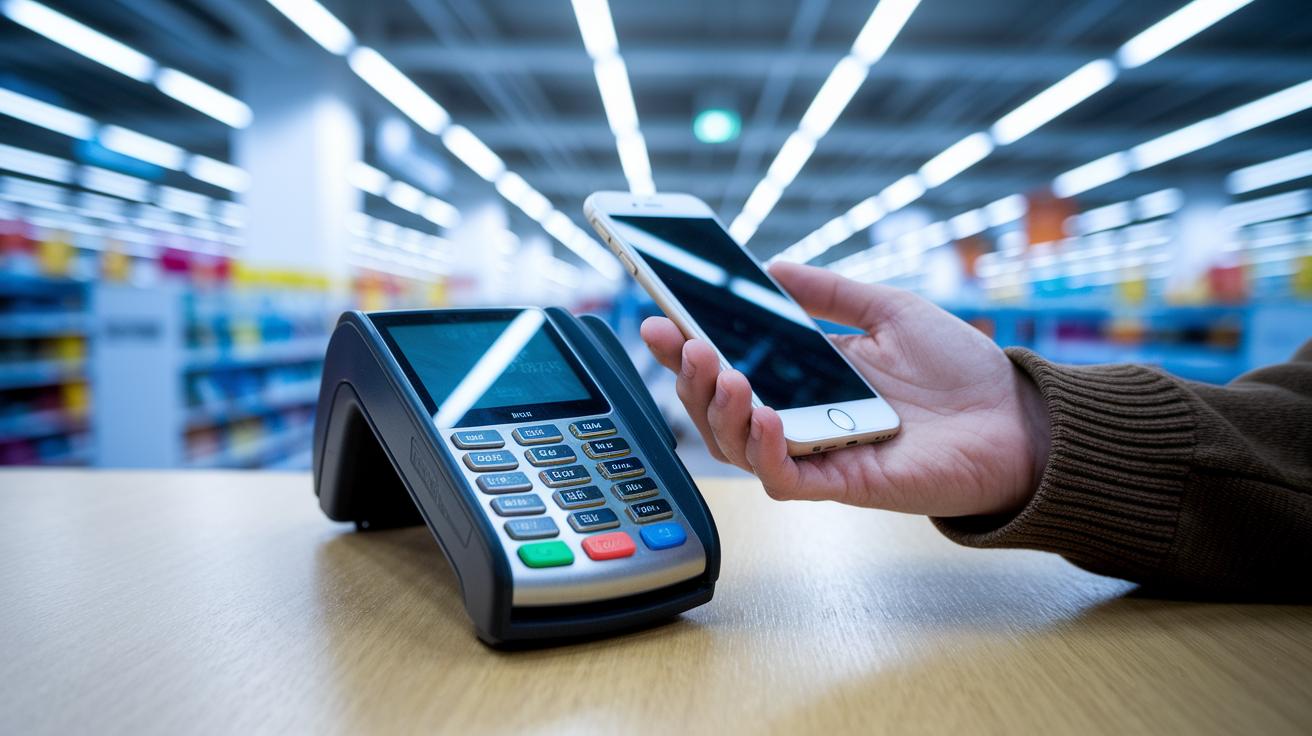
NFC mobile payments use several layers of security that work together like a strong team. Because these payments use short-range signals, the risk of outside interference is much lower.
Every time you tap your phone, advanced encryption kicks in. It turns your sensitive info into a one-time code, like a temporary digital key that vanishes quickly. This means your usual card details aren't exposed at all. Then, a special chip creates a unique digital signature for the transaction, using fresh data that is hard to copy.
Even so, there are challenges like malware or cloned NFC tags that push the system to improve. That’s why devices often add extra checks like fingerprint scans, face recognition, or passcodes. These extra steps work together to build a solid defense, keeping your payment safe without repeating the same basic checks.
Setting Up NFC Mobile Payments on Smartphones
Setting up NFC payments on your phone is really easy. If you’re using Android, just head over to Settings > Connections > NFC and then launch an app like Google Pay or Samsung Pay. This quick setup lets your phone securely chat with payment terminals, kind of like a friendly handshake.
For iPhone users, NFC switches on automatically once you add Apple Pay in the Wallet app. Simply add your credit or debit cards, and your iPhone will be ready for safe, contactless payments.
| Platform | Activation Steps |
|---|---|
| Android | Go to Settings > Connections to turn on NFC; then open Google Pay or Samsung Pay |
| iOS | Set up Apple Pay in the Wallet app; add your credit/debit cards |
Once NFC is on, linking your cards in your favorite wallet app is the next step. Whether it’s Apple Pay, Google Pay, Venmo, or PayPal, the process remains quick and hassle-free. And if you’re ever in a spot where you need to take payments, tools like Shopify’s Tap to Pay on iPhone turn your phone into a merchant terminal, making transactions safe and super convenient.
NFC Mobile Payments Use Cases in Retail and Beyond

NFC mobile payments make everyday transactions feel super easy and safe. In places like supermarkets, convenience stores, and even pop-up shops, customers just tap their phone to pay, quickly and securely. This simple approach shows how handy and adaptable contactless payment systems can be.
Public transport is another area where NFC really shines. Whether you’re catching a bus or riding a train, one tap is all it takes to pay your fare. No more searching for cash or cards, it’s fast, secure, and hassle-free. I like to think of it as a little nudge towards a more modern, efficient way of getting around.
Even event venues, like concert halls or sports arenas, are getting on board. Instead of dealing with long lines, you just tap your phone to get in. And guess what? Many brands have built loyalty programs into this tech, so repeat customers might earn rewards with every use. It’s a win-win: shorter wait times and a boost in customer satisfaction, all wrapped up in one neat package.
Beyond just retail or transit, this tech is changing the game in many areas of our daily lives. NFC mobile payments are steadily replacing older payment methods with secure, smooth transactions. Ever notice how tapping your phone feels like stepping into the future? It's proof that tech innovation can make life a little simpler and a lot more connected.
nfc mobile payments spark effortless secure transactions
NFC mobile payments let you complete transactions almost instantly, making them stand out from other contactless methods.
When you compare NFC to QR codes, the difference is simple. With NFC, you just tap your device, and your payment goes through right away. On the other hand, QR codes need a working camera and good lighting, which can slow things down. This makes NFC a solid choice when you need speed and ease.
NFC also holds its own against traditional mag-stripe or chip-based payments. Instead of sending out fixed card details that could be caught by someone else, NFC uses tokenization. Tokenization means turning your sensitive info into a one-time code for each transaction, which lowers the risk of fraud quite a bit. Sure, some digital wallets might have lower spending limits than physical cards, but the extra security and convenience of NFC usually win out over those small limits.
Overall, these points show why NFC mobile payments are often the top pick for safe and smooth transactions.
Future Trends in NFC Mobile Payments

Manufacturers and service providers are testing cloud-based tap-to-pay options and automated self-checkout stations. It’s like giving a quick, secure handshake at the register that speeds you right through the line.
NFC payments aren’t just for smartphones anymore. Soon, you’ll be able to pay using your wearable or even your car, making everyday transactions super flexible. And with built-in loyalty and rewards programs, you could automatically earn points or discounts every time you tap. Plus, new point-of-sale hardware and software are cutting down delays, even letting offline transactions queue so everything runs smoothly even when the connection isn’t perfect.
These changes are making NFC payments part of our everyday routine. As these innovations roll out, you can look forward to an even more connected and easy way to pay with just a tap.
Final Words
In the action, we broke down how nfc mobile payments work, from secure tap-to-pay steps and layered encryption to the various real-world use cases and emerging trends. The discussion outlined device configuration, compared methods, and emphasized robust security protocols. This clear, step-by-step look simplifies complex digital transactions, making it easier to approach the world of contactless payments with confidence. It's a bright outlook that shows how technology is making everyday transactions friendlier and more secure.
FAQ
Is Apple Pay an NFC mobile payment?
Apple Pay works with NFC technology, meaning it uses a short-range wireless link to complete transactions. When you tap your device at a terminal, secure data encryption ensures your payment stays safe.
What is an example of an NFC mobile payment system?
An example of an NFC payment system is using Google Pay or Samsung Pay. These apps use encrypted, one-time tokens generated by NFC to securely complete transactions when you tap your device.
How do I use NFC for mobile payments?
Using NFC for payments involves opening your payment app, selecting a card, authenticating with a fingerprint or PIN, and then holding your device near the payment terminal to complete the transaction securely.
Is Zelle an NFC mobile payment service?
Zelle is a bank-to-bank funds transfer service and does not operate using NFC. It focuses on sending money directly between accounts rather than processing contactless payments via a mobile device.
Which payment apps use NFC technology?
Apps like Apple Pay, Google Pay, and Samsung Pay use NFC to complete contactless transactions securely when your device is near a payment reader; meanwhile, apps like Paytm, PhonePe, and Cash App offer different mobile payment features.


