
Ever wondered if altcoins might unlock a smarter way to invest? Imagine digital currencies that go beyond Bitcoin by offering faster transactions and smart contracts, which are like self-operating digital agreements. But while these features can be exciting, altcoins also come with risks such as bumpy price swings and special security issues. This article explains things in a clear, simple way to help you find promising opportunities without feeling overwhelmed. It’s a great starting point if you’re ready to add some fresh energy to your portfolio and explore the world of altcoins with your eyes wide open.
Essential Altcoin Analysis for New Investors
Altcoins are simply digital currencies that aren’t Bitcoin. They often come with cool extras like quicker transaction speeds, improved privacy, or smart contracts (tools that automatically handle agreements when conditions are met). For instance, did you know that Litecoin was once seen merely as an experiment for faster payments? That little fact really helps us see how altcoins stand apart from Bitcoin.
Investing in altcoins can add a mix of assets to your portfolio, which might lead to early, high-return opportunities. At the same time, they carry risks like lower trading volumes, big price swings, security issues, and changing government rules. Imagine it like balancing on a seesaw – there are bright upsides on one end and possible challenges on the other. It’s smart to stay excited yet cautious.
Here are some main categories to keep an eye on:
- DeFi tokens: These are used for lending, borrowing, and trading on platforms that don’t rely on a single bank or authority.
- Stablecoins: They’re designed to hold a steady value similar to traditional money.
- Utility tokens: These give you access to unique services within specific networks.
- Play-to-earn coins: These pop up in gaming worlds where you can actually earn rewards as you play.
- Governance tokens: They let holders have a say in making project decisions.
This breakdown helps you look at altcoins with clear, friendly insight. When exploring an altcoin, check out factors like how fast transactions go, the strength of its community, and the reliability of its technology – all key points to consider. Keep in mind that past performance isn’t always a sign of future gains, so balancing the exciting benefits with the inherent risks is crucial before taking the plunge into altcoin investing.
Assessing Altcoin Fundamentals for New Investors

When you’re looking at an altcoin, a good starting point is its market capitalization. This shows the overall value of the coin in the blockchain market and helps you understand its liquidity. For example, if a new token has a small market cap, it might jump around in price more often, which means there’s a higher risk.
Next, take a look at how many coins are already out there versus the total possible coins. This ratio gives you a feel for scarcity. Picture a token where nearly all coins are in circulation, that suggests less room for sudden price spikes or drops because there aren’t many tokens left to mine.
It’s also smart to think about the token’s purpose. What exactly does the coin do within its network? A token that helps cover transaction fees, for example, might add more value to the ecosystem. At the same time, keep an eye on developer activity, like GitHub updates. Frequent updates can show that the team behind the project is actively improving it.
Don’t forget community engagement either. A lively, active community on forums and social media often boosts a token’s reputation and gives you hints about how people really feel about it. And while historical price data can be useful, it might not tell much for newer altcoins. In these cases, real-time network statistics and developer progress are your best guides for making a smart investment decision.
Technical Indicator Analysis for Altcoin Evaluation by Beginners
Moving averages help clear up the jumble of price data so you can see the trend more clearly. A 20-day simple moving average (SMA) gives you a quick snapshot of recent performance, while a 50-day exponential moving average (EMA) puts extra focus on the most current prices for a faster reaction. When the 20-day SMA crosses above the 50-day EMA, it might be a sign that buying interest is on the rise. On the flip side, if it crosses below, you might be looking at a sell signal. Picture it like this: a gentle upward curve of a short-term average overtaking a slower, more stable one suggests that buyers are stepping in.
Momentum indicators such as the 14-day Relative Strength Index (RSI) help you gauge if a coin is getting too expensive or too cheap, basically, if it's overbought or oversold. An RSI reading above 70 could mean the coin is overbought and might pull back, while a reading below 30 might signal a possible bounce back. Then there are Bollinger Bands, typically set to a 20-day period with a doubling factor of 2. These bands wrap around the moving average to show market volatility. Imagine a rubber band, you know when it’s stretched too far, it’s ready to snap back.
Volume analysis compares the day’s traded volumes with a 30-day average to see if a price breakout is real. A surprising surge in volume often confirms that the movement is solid, not just a fluke. And don’t forget about chart patterns like head-and-shoulders or double bottoms. For example, if you spot a double bottom, where prices dip twice before rising, it’s a clear hint that the trend might reverse soon.
| Indicator | Purpose | Typical Setting |
|---|---|---|
| 20-day SMA | Trend direction | 20 |
| 50-day EMA | Trend confirmation | 50 |
| RSI | Overbought/oversold | 14 |
| Bollinger Bands | Volatility band | 20,2 |
| Volume analysis | Breakout confirmation | Daily vs 30-day avg |
Risk Management Strategies in Altcoin Investing for Beginners
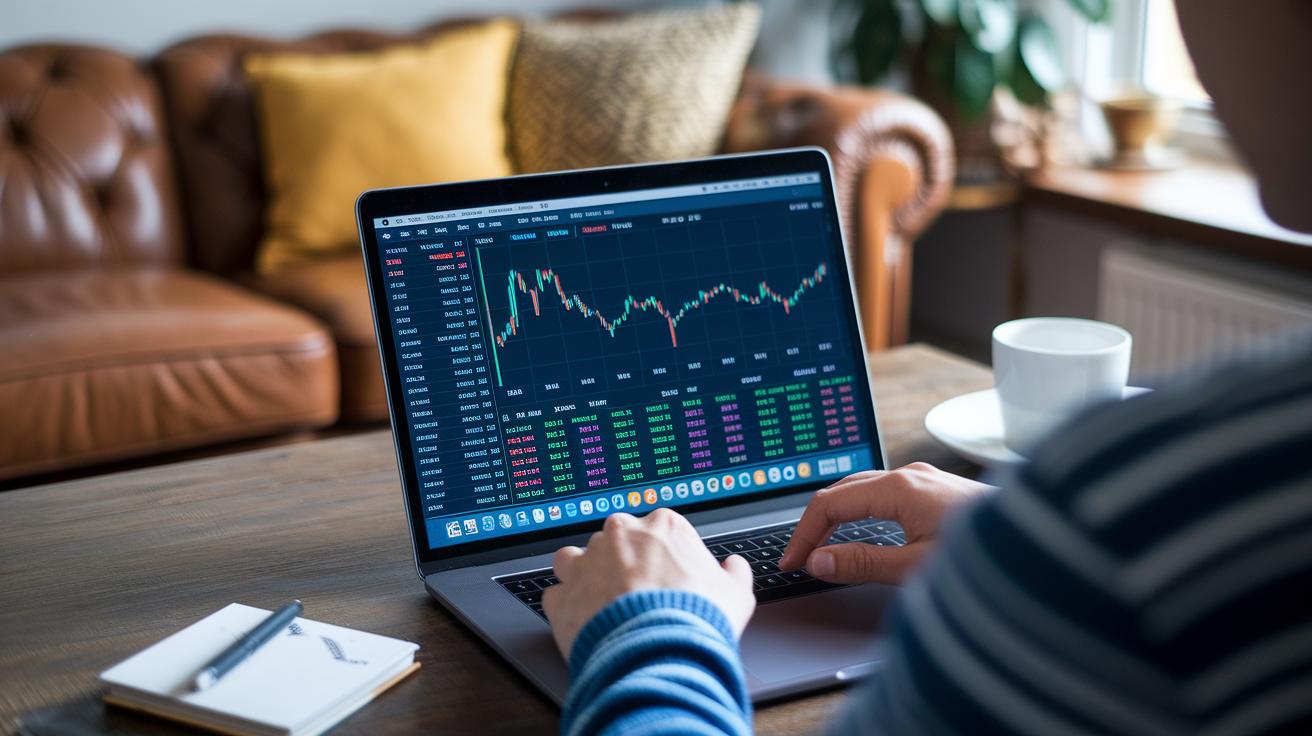
Managing risk in altcoin trading starts with setting clear, achievable profit targets. Before you jump into trading, decide what gain is enough for you and plan ahead for any downturns. Think of using stop-loss orders, pre-arranged measures that automatically sell your tokens if prices hit critical low points, as your safety net against sudden price falls. After all, we’ve seen altcoins drop over 70% during past bear markets.
It’s smart to keep your bets small. Limit each altcoin to only 2–5% of your total investment. For example, if your portfolio is $1,000, put no more than $20 to $50 on a single coin. This way, even if one coin takes a hit, your overall portfolio stays more secure.
Another tip is to spread your investments over at least five different altcoins that aren’t closely related to each other. This diversification means that if one token struggles, your other investments might continue to perform steadily rather than all dropping at once.
- Set realistic profit targets.
- Place stop-loss orders around key support levels.
- Limit each token to 2–5% of your total capital.
- Diversify by investing in at least five uncorrelated altcoins.
These steps can help you build a balanced digital asset portfolio while keeping risk in check, making your altcoin journey less daunting and more manageable.
Comparing Top Altcoins in Practical Analysis for New Investors
If you’re new to altcoin investing, checking out the leading coins can really help clear things up. It’s a smart idea to look at each coin’s market cap (basically, the total value behind a coin) and its unique role. Take Ethereum, for instance. Think of it as a digital engine powering smart contracts (self-running agreements) that support a host of decentralized apps. For example, Ethereum’s clever design pushed its market cap to around $200 billion, making it a real cornerstone in digital contracts.
Every altcoin is built for a specific purpose. Binance Coin helps cut fees on its native trading platform and stands strong with a market cap of about $50 billion, which traders find pretty appealing. Cardano, sporting a market cap near $40 billion, relies on a scalable proof-of-stake system (a more energy-efficient method) and might catch the eye of anyone eyeing sustainable tech. Polkadot, valued at roughly $30 billion, makes it easier for coins to interact across different systems, giving it a unique twist. And then there’s Solana. With a market cap of about $20 billion, its high-speed network offers fast, efficient transactions that a lot of people really appreciate.
| Altcoin | Market Cap (USD) | Key Feature |
|---|---|---|
| Ethereum | $200 B | Smart contract platform |
| Binance Coin | $50 B | Exchange utility token |
| Cardano | $40 B | Scalable proof-of-stake |
| Polkadot | $30 B | Cross-chain interoperability |
| Solana | $20 B | High-speed network |
This handy snapshot can really help new investors decide which altcoin fits best with their game plan. It simplifies the process of comparing different coins and helps you make smarter choices with your investment options.
Monitoring Altcoin Trends and News for Entry-Level Investors

Keeping track of altcoin trends means checking signals from several sources. Think of Bitcoin’s price changes, especially shifts in its Ether-Bitcoin ratio (which compares Ethereum to Bitcoin), as hints of broader market activity. For example, if Bitcoin takes a big swing, you might notice altcoin prices making a similar leap, perhaps a sudden jump that leads to a 15-20% change in a single day.
Social media, like crypto forums and Twitter feeds, offers quick insights into market moods. It lets you see how other investors are reacting to the latest news. And don’t forget those big regulatory announcements or global economic events, they can instantly shift short-term trends.
To steer clear of misinformation, rely on trusted updates from official developer channels, whitepaper revisions (updates to the core document), or dashboards that track on-chain metrics (data pulled directly from the blockchain). Checking these sources at least twice a day, once in the morning and again in the evening, can help you catch any sudden changes. Setting up alerts for major news events might also keep you ahead as market reactions unfold.
Final Words
In the action, we set out the basics of altcoin investment. We defined altcoins, discussed their perks and risks, and explored key metrics, chart signals, and smart risk controls. We also compared top digital coins and shared tips for tracking market updates. This guide on altcoin analysis for new investors offers real-world insights for making smart investment choices. With clear steps and accessible examples, you can confidently study market trends and expand your portfolio. Keep learning, and enjoy the ride!
FAQ
What are some altcoin examples and which altcoins exist?
The question “What are altcoin examples” explains that altcoins refer to any cryptocurrencies beyond Bitcoin. Examples include Ethereum, Binance Coin, Cardano, Polkadot, and Solana, each offering unique features.
What are the top 10 altcoins?
The question “What are the top 10 altcoins” focuses on the leading cryptocurrencies by market cap. Commonly, these include Ethereum, Binance Coin, Cardano, Polkadot, Solana, and others, though rankings may shift with market trends.
How can I find new crypto projects before they list or how to find new crypto coins early?
The question suggests early discovery is key. Techniques include watching GitHub for developer updates, checking crypto forums and social media, and monitoring on-chain metrics from trusted analytics before public release.
What altcoins could surge 10-100x or have 1000x potential?
The question about high-multiplier potential examines tokens with innovative technology, strong communities, and solid fundamentals. Such projects carry substantial potential gains, yet they come with increased risks.
Is Ethereum considered an altcoin?
The question “Is Ethereum an altcoin” clarifies that Ethereum is classified as an altcoin because it’s a cryptocurrency beyond Bitcoin. Its smart contract capabilities and broad decentralized application ecosystem set it apart.
How do you analyze altcoins?
The question “How do you analyze altcoins” emphasizes reviewing key metrics like market cap, circulating supply, developer activity, and technical indicators. Combining on-chain data with social signals helps in spotting promising trends.


