
Do you really think relying on gut feelings is enough when making crypto choices? Many traders risk their money by skipping simple methods that could boost their profits today.
Imagine trading on clear, fact-based rules, rules that act like a trusted map guiding you through big price swings. Whether you like quick daily trades or prefer a quieter buy-and-hold style, the right plan can truly change your approach.
Let’s explore five strategies that can help keep your emotions in check while you aim for steady growth in the challenging crypto market.
Essential Crypto Trading Strategy Overview
Active trading is all about catching quick price changes by staying alert every step of the way, while more relaxed, long-term investing aims to ride out the ups and downs over time. With active trading, you need to make fast decisions and adjust your rules on the fly. On the other hand, a buy-and-hold approach lets you ease off the daily screen-checking. No matter which path you choose, having clear rules and using automated tools helps keep emotions in check, so your trades rely on solid technical signals instead of a gut feeling.
Take a look at some common methods:
- Day trading: You open and close your trades in one day to benefit from rapid price shifts.
- Swing trading: You keep your trades open for several days or weeks, hoping to catch short-term trends as they develop.
- Algorithmic trading: Smart computer programs handle your trades by following preset rules, cutting down on mistakes and capturing quick moves.
- Long-term holding: This method, often seen as a passive strategy, involves buying assets and holding onto them over a long period, trusting in gradual growth despite market swings.
Picking the right approach really depends on what you're aiming for and how much risk you can stomach. If you're the type who loves watching market changes every day, day trading or algorithmic trading might fit you best. But if you prefer a more laid-back strategy, long-term holding could be your go-to. Some traders even mix different strategies to handle various market conditions. Ultimately, having a clear plan with strict rules not only helps manage risks but also makes it easier to keep a cool head when things get a bit wild.
Day Trading and Scalping Crypto Tactics

Day trading means buying and selling crypto within the same day to profit from quick price moves. Scalping, on the other hand, focuses on tiny price gaps, nabbing small profits in rapid trades. In day trading, you keep a close eye on risks and depend on live market data. Scalpers use fast order placements and smart tools to catch opportunities that only last a moment.
- Market selection: Look for active cryptocurrencies that trade a lot. High trading volume keeps things flowing smoothly and narrows the spread between buy and sell prices.
- Entry criteria: Set clear price levels based on signals like momentum (which tells you the strength of a price move) and volume (the total number of coins traded). This helps you decide when to step in.
- Risk controls: Use stop-loss orders to keep losses small if the trade doesn’t go your way. It’s all about protecting your money as you carve out your trading session.
- Exit rules: Decide in advance when to take your profits. Setting clear targets can help you sell before the market turns against you.
- Post-trade review: After the trading day, review your trades to see what worked and what didn’t. This way, you learn from each move and refine your strategy.
- Use very short-term charts to catch price changes minute by minute.
- Know when to use limit orders (where you set the price you want) versus market orders (which fill at the current market price) for the best speed.
- Keep a constant watch on bid-ask spreads, this helps you spot the best chances quickly.
- Stick with low leverage to avoid big losses during sudden market swings.
- Stay updated with market news to catch any events that might cause quick price changes.
- Consider using fast, reliable tools and technical indicators to help you make split-second decisions.
By mixing day trading and scalping based on your comfort with risk and the day’s market conditions, you can build a strategy that works for you.
Swing Trading and Trend Following in Crypto Markets
Swing trading and trend following are two popular ways to trade crypto, each with its own style and timing. Swing trading means holding your trade for a few days or even a couple of weeks to catch medium-term price moves during changing market moods. Trend following, on the other hand, is all about sticking with a clear move in price for several weeks or even months, letting you ride a steady wave.
| Strategy | Holding Period | Ideal Market Condition |
|---|---|---|
| Swing Trading | Days to Weeks | Moderate price changes with clear swing signals |
| Trend Following | Weeks to Months | Steady, directional price movements |
Tools like MACD (which shows momentum by comparing moving averages) and RSI (which helps you spot overbought or oversold conditions) are key for both methods. They give traders clear hints on when to jump in or step out, making each decision more data-based and less about guessing.
Algorithmic and Automated Crypto Trading Systems
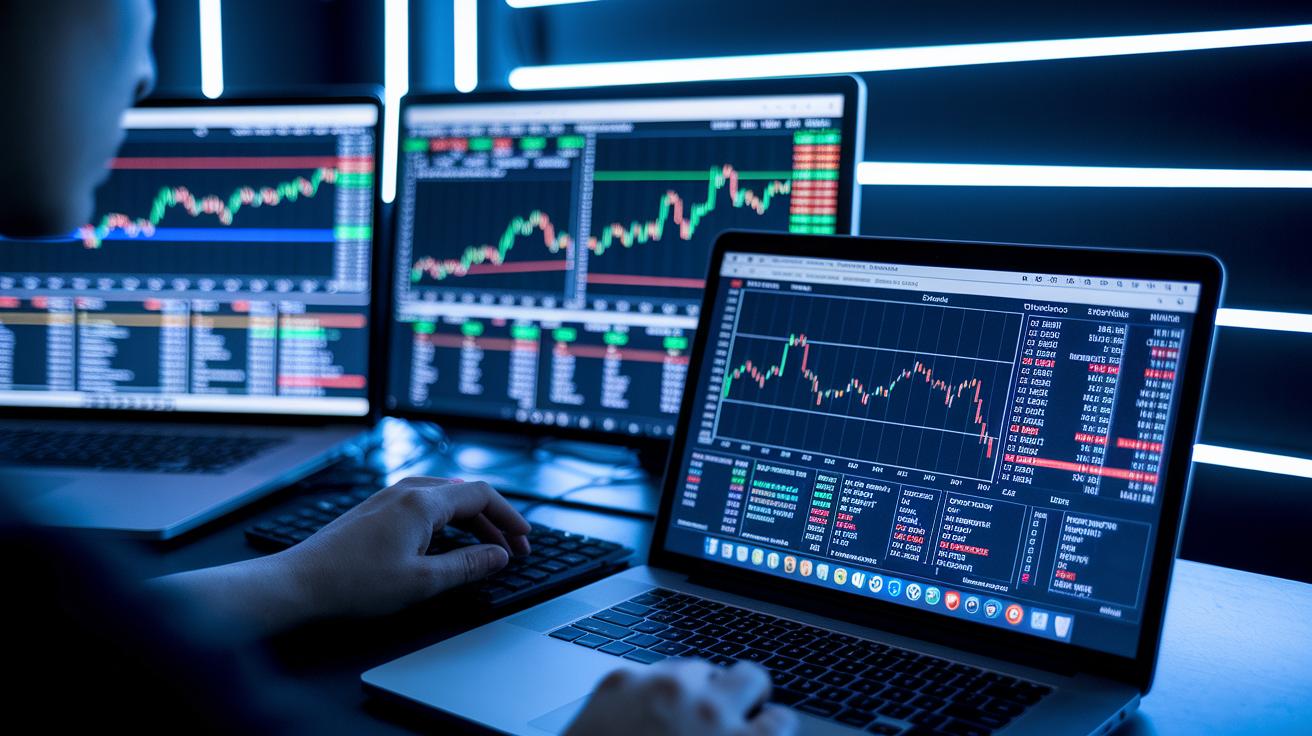
Algorithmic trading uses pre-written rules to enter and exit trades automatically. It lets you rely on hard data instead of knee-jerk emotions. Often, you use past market numbers to see how your strategy might have worked before you risk real money. Many traders build bots with Python or on special platforms that you can tweak to fit your own goals.
- Grid trading: Think of it like slicing up the price range into different steps. Each step triggers buy or sell orders so you can catch small, steady gains as prices move.
- Arbitrage: This strategy grabs tiny price gaps between different exchanges. You buy low on one and sell high on another almost at the same time.
- Momentum: Here, the software spots strong price moves early and jumps in to ride the trend until the action starts to slow down.
- Mean-reversion: This method is all about balance. It assumes that prices will eventually return to a middle range, so you buy when prices dip too low and sell when they climb too high.
- High-frequency: With quick, rapid-fire algorithms, this approach makes many trades every second to benefit from even the smallest price shifts.
When you set up an automated system, testing it on past market data is a must. This backtesting shows whether your strategy is solid before you try it live. It’s also smart to add strict risk controls like stop-loss orders and fixed position sizes. Checking your trades regularly helps you fine-tune your details and keep things balanced between making the most of a good trend and protecting yourself from sudden market changes.
Futures, Options, and Derivative Crypto Trading Methods
Traders use futures and options to ride market swings using leverage. This means you can control a large investment with only a small amount of money. You get to make a bet on where prices will go, choosing between calls (bets prices will rise) or puts (bets prices will drop). Smart use of these tools can boost your profits, but it also means you need to be really careful with how much risk you take so you don't end up getting forced out of your positions.
Start by setting up an account on a platform that offers these leveraged products. Make sure your account is ready for the fast pace of derivative trading. Next, learn the margin rules. Margin requirements are the funds you must maintain to keep your positions open; if these rules aren’t met, you risk getting liquidated unexpectedly.
Then, work out your position sizing carefully. This means figuring out how big each trade should be by balancing potential gains with the risk involved. And don’t forget exit planning. Set clear rules for when you want to close a trade, whether that's to lock in profits or to cut losses if circumstances change.
| Risk Management Technique | Why It Matters |
|---|---|
| Stop-loss orders | They help limit potential losses by automatically closing a trade when prices move too far against you. |
| Hedge positions | These are trades in the opposite direction to help balance out losses if the market turns unexpectedly. |
| Margin alerts | These notifications keep you aware of when your available funds are dipping below safe levels. |
| Stress testing | Run simulations to see how your strategy would work during volatile market conditions. |
By combining these steps and using strong risk management tools, traders can better balance the risks and rewards. It’s like having a safety net in the fast-paced world of derivative crypto trading. Ever notice how important it is to stay on top of your game? This careful approach helps keep your trading steady even when markets get rough.
5 crypto trading strategies: Boost profit today

Risk management is key when trading cryptocurrencies in choppy markets. It keeps your money safe while you enjoy the chances the market offers. When you set clear limits for each trade, you not only cut down on your losses but also secure your winnings when things go your way. A calm head and smart risk checks really change the game.
- Risk per trade: Only use a small slice of your total cash for each trade.
- Leverage limits: Stick with low leverage so you don't face huge losses during sudden market shifts.
- Stop-loss placement: Place stop-loss orders carefully to avoid big hits if the market suddenly turns against you.
- Profit targets: Decide in advance where you'll exit a trade to lock in profits when a trend looks good.
- Diversification: Spread your money across various coins and plans to lower the risk from one asset hurting everything.
- Periodic review: Check your trading plan regularly and tweak it to fit new market conditions.
| Profile | Equity Coins % | Altcoins % | Stablecoins % |
|---|---|---|---|
| Conservative | 70% | 10% | 20% |
| Balanced | 50% | 30% | 20% |
| Aggressive | 30% | 50% | 20% |
Using these risk control and portfolio ideas helps you stay in command even when the market spikes or dips. When you know exactly how much you're willing to risk and check your numbers often, you can easily adjust your game plan to match your goals and what the market demands.
Technical and Fundamental Analysis Tools for Crypto Trade Decisions
Mixing technical analysis with fundamental analysis gives you a fuller picture of the market. Technical analysis works with charts and simple math indicators that catch trends and hints of where prices might head. On the other hand, fundamental analysis digs into the details of a digital asset to check out its true value, kind of like reading its report card. Together, they help you build a trading plan that relies on real data, not just guesswork.
Here are some technical tools you might use:
- Chart Patterns: Look for familiar shapes like head-and-shoulders or triangles that often hint at a market turning point.
- Moving Averages: These smooth out price data, making it easier to spot trends and decide when to jump in or out of a trade.
- RSI (Relative Strength Index): This tool checks if an asset might be overpriced or underpriced by tracking how quickly its prices change.
- Fibonacci Retracements: They help you figure out likely levels where prices could reverse by looking at past moves.
- Volume Indicators: How many coins are traded can tell you if a price move has some real weight behind it.
- MACD (Moving Average Convergence Divergence): This compares different moving averages to spot when a trend might be shifting.
- Bollinger Bands: By measuring how much prices fluctuate around an average, these bands signal when a reversal might be on the horizon.
And for checking an asset’s overall health, consider these fundamental tools:
- Network Activity: Pay attention to transaction counts and active wallet numbers to see how busy the blockchain really is.
- Developer Activity: Regular updates and code commits are great signs that a project is still innovating.
- Market Demand: Look at trading volumes and community talks to get a sense of investor interest.
- Regulatory News: Keep an eye on policy shifts and announcements since these can change how a cryptocurrency performs.
When you blend technical signals with solid project fundamentals, you end up with a more well-rounded strategy. It’s like pairing a clear roadmap with a reliable car, each part supports the other so you can make your moves with more confidence.
Real-World Crypto Trading Examples and Case Studies

Real-world examples help us see how different trading strategies work in everyday markets. One case is a BTC swing trade that used moving average crossovers (a method comparing average prices to spot trends) to earn almost 15% profit in just two weeks. Another example shows an inter-exchange arbitrage strategy that grabbed a 0.8% price gap by quickly placing buy and sell orders on different platforms. And then there’s market making on a low-liquidity altcoin, where small, consistent profits come from the price spread, but this strategy does need a hefty amount of capital to keep trades running smoothly.
| Strategy | Example Setup | Outcome |
|---|---|---|
| BTC Swing Trade | Used moving average crossovers | About 15% profit in two weeks |
| Inter-Exchange Arbitrage | Quick buy and sell across platforms | Secured a 0.8% price gap |
| Market Making | Active trading on a low-liquidity altcoin | Steady spread profits with high capital need |
Timing is key, a quick execution can be the difference between a win and a loss. Also, having enough funds is crucial, especially for methods like market making, and strong risk controls like stop-loss orders really help keep losses small.
These examples show that nailing a successful trade in crypto isn’t just about a good idea, it’s about acting fast, matching your strategy to your funds, and sticking to solid risk controls. They also remind us that the market is as much about smart timing as it is about understanding our own limits.
Final Words
In the action, we've covered a range of topics, from active and passive crypto trading approaches to day trading, swing tactics, algorithmic systems, derivative methods, risk controls, and analysis tools. Each section sheds light on practical steps and techniques that work together to build solid crypto trading strategies. The real-world examples add valuable context by showing how these methods play out in live markets. All in all, clear insights and systematic breakdowns pave the way for confident, informed moves in your crypto trading strategies.
FAQ
Where can I find free crypto trading strategies, including PDFs?
The free crypto trading strategies PDF and online resources offer accessible guides covering tactics like scalping and swing trading, helping newcomers build a clear foundation with step-by-step instructions.
What does the most profitable crypto trading strategy mean?
The most profitable crypto trading strategy often blends technical analysis with strict risk controls, though profitability depends on market volatility, individual skills, and consistent strategy adjustments.
How do community resources like Reddit and books enhance crypto trading strategies?
The insights from Reddit and trading books present varied techniques and real-life experiences, which can help traders refine their approaches and adapt strategies to dynamic market conditions.
What is considered the best strategy in crypto trading?
The best strategy in crypto trading typically integrates defined technical setups, risk management, and disciplined execution, with specific methods varying based on market conditions and personal risk tolerance.
Can you make $100 a day with crypto trading?
Earning $100 a day is achievable with crypto trading, but sustained success depends on solid strategy execution, proper risk controls, and adapting to fluctuating market conditions.
What does the 30-day rule in crypto trading refer to?
The 30-day rule in crypto trading generally relates to tax regulations, where repurchasing an asset within 30 days after a loss may disallow the tax benefit, urging traders to plan trades carefully.
What is the best way to trade crypto, especially for beginners like trading Bitcoin?
The best way to trade crypto for beginners involves using simple technical analysis, starting with modest trades, and leveraging trusted educational resources to build confidence and effective risk management habits.
Which platforms are best for crypto and day trading?
The best crypto trading platforms offer user-friendly interfaces, strong security features, and diverse trading options, making them suitable for both day trading and long-term investment strategies.
How can someone learn crypto trading for free?
Learning crypto trading for free is possible through online tutorials, complimentary PDF guides, and active community forums that provide practical tips and foundational knowledge without extra costs.
What should beginners know about crypto futures trading?
The crypto futures trading approach for beginners involves understanding leverage, starting with small positions, and employing strict risk controls while practicing on demo accounts before trading real funds.


