
Ever thought a certification might boost your career? Portfolio management certifications might seem like just another document, but they really build trust and prove you’ve got advanced skills. Imagine a manager with a PfMP (Portfolio Management Professional certification, a mark of top-notch expertise) confidently leading key projects. These credentials work like a clear map to higher expertise, showing you can plan well, align smart strategies, and handle risks (that is, spotting and managing potential challenges). In short, they give you a real edge in a competitive field and can lift your portfolio management career to new heights.
Portfolio Management Certification Paths and Benefits at a Glance
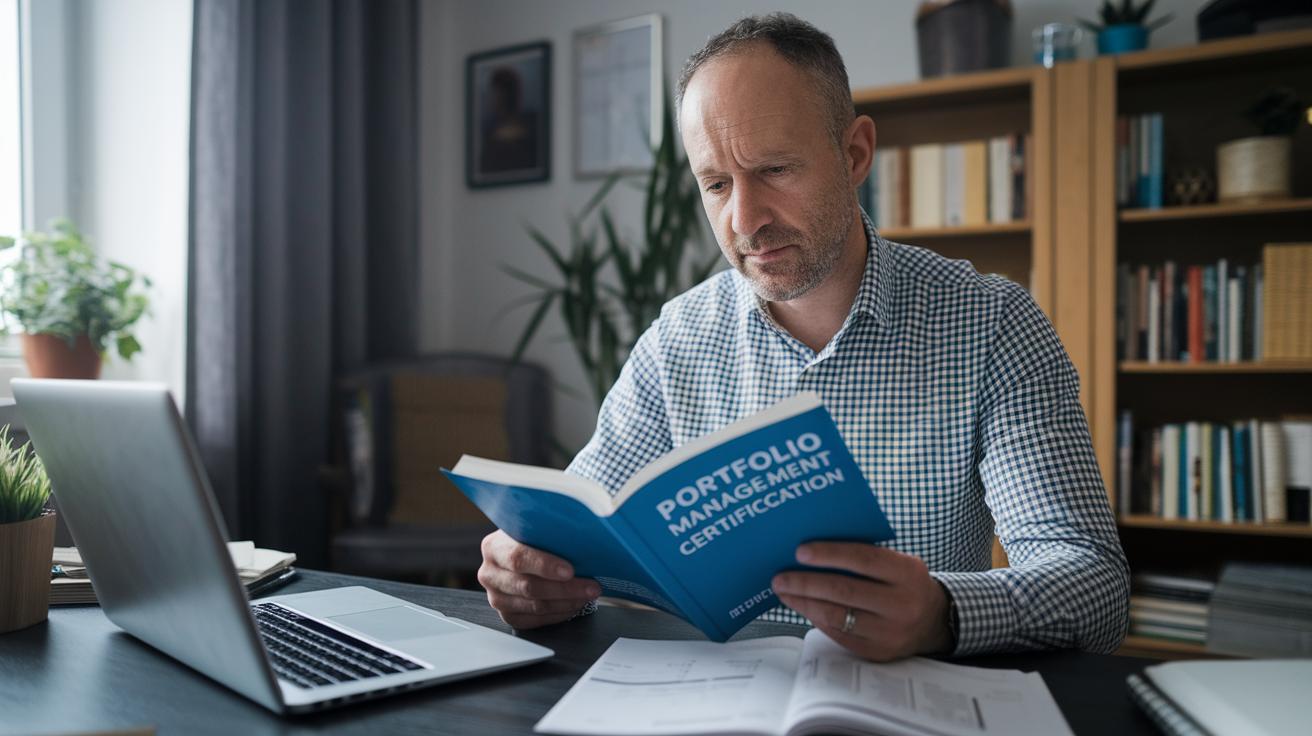
If you’re looking to boost your career in portfolio management, there are several great certification paths you can take. Each one shines a light on different skills that help you manage a strong portfolio. For instance, think of the PfMP® as a badge of honor for a seasoned manager. One portfolio manager once said, "After earning my PfMP, I was trusted with managing critical projects that align closely with our company's strategy." That tells you it really opens doors.
PfMP® is aimed at those with a good amount of experience in portfolio management, usually around 4 to 7 years, or at least 96 months of business experience in the past 15 years. Its exam tests topics like benefit realization planning, which is all about planning to get good returns; strategic alignment, or making sure projects fit the company’s goals; governance; portfolio performance; risk management; and communications management. In short, earning a PfMP® shows employers you have advanced skills.
MoP® from APMG comes with two levels: Foundation and Practitioner. At the Foundation level, you learn the basic ideas and terms, and at the Practitioner level, you see how to use these ideas in real jobs. This step-by-step approach makes it easier for you to build up your expertise over time. It also works well with other frameworks such as PRINCE2® and MSP®.
The Managing Portfolios certification from APMG offers a clear online exam that covers key topics like governance models, performance metrics, and project design. Like many certifications, it prepares professionals by breaking down complex ideas into simpler parts.
Then there’s ICP-LPM from ICAgile, which leans into agile practices. This certification focuses on lean budgeting (making sure you don't overspend), resource allocation (deciding where to put your resources), progress measurement, and aligning strategies. It's meant to help financial portfolio leaders make quick, data-driven choices.
Lastly, the PfM² certification from the PM² Alliance uses a short, timed exam of 50 questions in 45 minutes. You’ll need to answer 35 correctly to pass. This exam is a solid way to grasp the PM² methodology and shows you have a good foundation.
Each certification path paves the way for more credibility. Not only do they help you build real skills, but they can also lead to higher-level roles and new opportunities in your career.
Eligibility and Prerequisites for Portfolio Management Certification

If you're eyeing the PfMP® certification, you need a solid background. You should have worked for at least 96 months in a business setting over the past 15 years or have 4 to 7 years of portfolio management experience based on what you studied. Think of someone saying, "I have over eight years in portfolio management," which shows they have the hands-on know-how needed.
MoP® is a bit easier to start with. At the Foundation level, there are no formal prerequisites. But if you want to move on to the Practitioner level, you’ll need to complete the Foundation course first, so you build on a good base of practical knowledge.
For the Managing Portfolios certification, a basic understanding of project or program management can be really helpful. It's a great step for those who already have some industry know-how. On the other hand, ICP-LPM is designed for folks who are comfortable with agile principles. There aren’t any strict requirements here, which makes it a friendly option for many working in agile environments.
PfM², meanwhile, suggests that you get familiar with their system by earning the PM² Certification and doing relevant training. But don’t worry, it doesn’t impose rigid rules. This variety of prerequisites makes it simpler for you to pick a certification that matches your current skills and career goals.
Portfolio Management Certification Program Comparison and Cost Evaluation

Different certification programs come with a variety of fees, so knowing how the costs add up is really important when budgeting for your investment. Take MoP® exams for example: they charge fees based on the exam level, with prices changing from the Foundation to the Practitioner level. And then there are the Managing Portfolios and ICP-LPM exams, which each have their own registration fees. It’s a bit like picking out items on a menu, you need to budget for every course.
Imagine pricing your certification like ordering a three-course meal. Each course has its own price tag, and together, they create the full dining experience. This simple picture helps show that every part, from the training sessions to exam registration, is an essential piece of the overall cost.
The PfM² Alliance keeps things straightforward with a fixed fee for its 45-minute, 50-question exam. That makes it really easy to plan your costs. In contrast, the fee for the PfMP® exam can change depending on your PMI membership status and where you live. Plus, if you want to renew your PfMP® certification later, you’ll need to factor in extra expenses for professional development units (PDUs).
Remember, the total cost isn’t just about the exam fees. You also have to consider the price of training courses, study materials, and future recertification. Check out the quick summary below:
| Certification | Fee Structure |
|---|---|
| MoP® | Tiered pricing by level |
| Managing Portfolios & ICP-LPM | Separate registration fees |
| PfM² Alliance | Standard exam fee |
| PfMP® | Variable fee by status/region + recertification PDUs |
Be sure to weigh all these factors so you can get a clear picture of your full financial commitment.
Curriculum Breakdown of Portfolio Management Certification Programs

The MoP® curriculum begins with a Foundation course that explains basic principles and key terms in simple language. Then, at the Practitioner level, you put these ideas into action through real-world examples. I once used these methods to tackle a tricky project, simply by rethinking the approach based on core principles. This step-by-step process builds a solid base before you move into more complex topics.
The Managing Portfolios certification is all about setting up clear frameworks and understanding performance metrics (which are measures of how well projects are doing). You'll learn techniques to assess risks and see how each project ties back to the company’s overall goals. For instance, a typical case study might show how matching projects with business strategy leads to noticeable improvements in outcomes.
ICP-LPM takes a fresh, modern approach by focusing on lean budgeting, resource allocation, and tracking progress. Its interactive style is great for fast-paced environments, almost like adjusting your budget on the fly while keeping a close eye on team resources and overall performance.
The PfM² Portfolio Certification provides a deep dive into the PM² methodology, carefully guiding you through the basics of portfolio design, execution, and governance. I even heard someone say, “Learning PfM² turned my view of portfolio management into a smooth process with clear checkpoints.”
Lastly, the PfMP® exam syllabus covers a wide range of topics, including planning for benefits, strategic alignment, governance, portfolio performance, risk management, and communication strategies. Each module is designed to build your expertise step by step, preparing you to confidently handle modern portfolio oversight and asset strategy challenges.
Exam Preparation and Application Process for Portfolio Management Certification

When you're gearing up for a portfolio management certification exam, it all begins with a clear, organized plan. For example, if you're taking the PfMP® exam, you'll need to share your contact information, education details, and work experience. This exam covers five main areas: benefit realization planning, strategic alignment, governance, portfolio performance, and risk management (the process of tracking and handling risks). Think of it as laying a strong foundation before adding more layers to your expertise. One candidate even mentioned how mapping out each area with a detailed study schedule really boosted their confidence.
A mix of self-study, formal training courses, and official study guides can help simplify tricky topics into everyday concepts. Many candidates find that practice exams are a great way to get used to how the test feels. It’s like rehearsing for a big performance, you get more comfortable with the stage.
For MoP® candidates, adding sample papers and real-world case studies at the Practitioner level can make study sessions a lot more practical. In a similar way, those preparing for the ICP-LPM or Managing Portfolios certification often enjoy interactive online modules and workshops that bring the material to life. Plus, the PfM² Alliance even offers sample questions and workshops that mimic the exam’s style, helping you feel at home with the timed test setup.
A few practical pointers: set up a regular study schedule and keep taking practice tests. This approach not only builds your confidence but also helps you sharpen your problem-solving skills until test day finally arrives.
Industry Recognition and Career Benefits of Portfolio Management Certification

Portfolio management certifications can really boost your career by building trust and showing that you can tie projects to business goals. Take the PfMP® for example, it signals you’ve got strong skills in handling portfolios. One portfolio manager mentioned, "After earning PfMP®, I saw a clear path to promotions and a notable bump in my salary." That kind of feedback shows how a certification can open doors to better roles and higher pay.
MoP® and Managing Portfolios also sharpen your strategic thinking, making you a promising candidate for leadership roles. Plus, the agile-focused ICP-LPM equips you for lean budgeting and quick adjustments in fast-paced markets.
Then there’s the PfM² certification, built on the PM² method. It’s a great stepping stone into public-sector portfolio management and can really strengthen your professional profile. When you add these credentials to structured career growth programs, you end up with a clear path to advance without any redundant benefits.
Think of it this way: earn your certification and watch your career path transform as employers recognize your proven, industry-standard skills.
Industry Recognition, Career Benefits and Success Stories from Certified Portfolio Managers

Many portfolio managers say that earning this certification has changed the way they work by making project goals match their company’s strategy better. One manager shared, "My certification directly led to aligning every project closely with our company's strategy," showing that practical skills from the program lead to real, measurable results.
Experts also say the certification has boosted their ability to handle risk (the chance that things might not go as planned) and plan for benefits. For example, one financial specialist remarked, "My ability to assess risk has boosted my confidence and visibility at work." This personal insight really highlights the program's impact on everyday career progress.
Here are some key benefits:
| Benefit | Description |
|---|---|
| Project Alignment | Projects match company strategy more closely |
| Governance | Clearer decision-making frameworks |
| Professional Confidence | Stronger risk assessment skills boost visibility |
These personal stories and measurable outcomes show that portfolio management certification is a practical tool that not only builds professional skills but also helps drive real career benefits.
Final Words
In the action of exploring portfolio management certification paths, we broke down the pros and cons of top credentials, discussed eligibility, and compared costs. We also looked at exam prep and detailed course contents so readers can zero in on the option that fits best. Stories from certified managers added real-life flair, showing how these credentials build confidence and open new doors. Moving forward with portfolio management certification can be a smart step toward a brighter financial future.
FAQ
Portfolio management certification online
The portfolio management certification online option provides flexible web-based training that covers topics like strategic alignment and governance, letting you study from anywhere at your own pace.
Portfolio management certification programs
The portfolio management certification programs offer courses in risk management, governance, and performance that build your skills to lead financial projects and support strategic decisions.
Portfolio management certification cost
The portfolio management certification cost depends on the provider, including expenses for training courses, study materials, exam fees, and recertification charges, making it a worthwhile investment for career growth.
Portfolio management certification free
The portfolio management certification free options are limited to basic introductory courses, while most accredited programs require fees to cover comprehensive materials and official training.
Best portfolio management certification
The best portfolio management certification depends on your career goals and background, with popular options like PfMP®, MoP®, and ICP-LPM known for solid curriculums and strong industry recognition.
Portfolio management professional (pfmp)
The portfolio management professional (PfMP) credential validates advanced portfolio skills and extensive experience, proving your ability to align projects with business strategy for improved career prospects.
Portfolio Management salary
The portfolio management salary often improves after certification because employers value enhanced skills in governance and strategic oversight, leading to more advanced, higher-paying roles.
Certified portfolio manager certification
The certified portfolio manager certification prepares you with in-depth knowledge in risk management, benefit realization and governance, signaling your competency to employers and advancing your career.
What certification do you need to be a portfolio manager?
The certification needed to be a portfolio manager varies, with many professionals choosing credentials like PfMP®, MoP®, or similar programs that provide the expertise in planning, governance, and risk management.
What is PgMP and PfMP?
The PgMP and PfMP are certifications for advanced management roles; PgMP focuses on program oversight, while PfMP measures your skills in portfolio planning, governance, and aligning investments with strategy.
Do portfolio managers need CFA?
The need for a CFA depends on your role; while a CFA is valued for investment analysis, many portfolio managers opt for certifications that emphasize governance and strategic portfolio management.
How much does safe portfolio management certification cost?
The safe portfolio management certification cost varies by provider, covering exam fees, study materials, and potential recertification charges as part of your professional development budget.
Project portfolio management training
The project portfolio management training blends modules on project oversight and strategic alignment, preparing you to manage multiple projects while ensuring they meet overall business objectives.
Asset and portfolio management Certificate
The asset and portfolio management certificate program offers instruction in financial asset oversight and portfolio governance, equipping you to manage investments and align strategic goals effectively.
Wharton asset and portfolio Management Certificate
The Wharton asset and portfolio management certificate centers on advanced strategy and investment analysis, enhancing your ability to manage diverse portfolios with strong governance and risk assessment tactics.
Program Management certification
The program management certification focuses on coordinating multiple related projects, giving you skills to prioritize initiatives, manage risks, and boost overall organizational performance.
Strategic Portfolio Management training
The strategic portfolio management training highlights governance models, performance metrics, and risk assessment, helping you align projects with business strategies to make better decisions.
Project Management Certificate program
The project management certificate program covers planning, execution, and risk assessment skills, serving as a valuable step for professionals looking to broaden their expertise in project or portfolio management.


