
Ever wonder if all bitcoin ASIC miners work the same? Actually, they don’t. They have different hash rates (that’s the speed at which a miner performs calculations) and use power differently, which can really affect how much you earn.
A miner with a higher hash rate cranks out more calculations every second, which can lower your electricity bill. Our guide reviews the best miners for 2025 and lays out their speed and energy-saving features in clear, easy terms.
Curious which miner might be the best for you? Read on to compare your options and get a straightforward look at today’s top bitcoin mining hardware.
bitcoin ASIC miner comparison: Superior Performance
When choosing bitcoin ASIC miners for 2025, you’ll want to look at a few key points: hash rate, power consumption, and energy efficiency. A higher hash rate means the miner does more calculations per second, boosting your chance to solve a block and earn rewards. Meanwhile, lower power use and improved efficiency keep your running costs in check, especially important when your system is on all day and night. Manufacturers have fine-tuned these machines to hit the mark on specific tasks, whether it’s for SHA-256 or Blake3.
In today’s competitive market, comparing these features side-by-side helps you make quick, informed decisions. Whether you prioritize raw speed or want to trim energy costs, both traders and mining operators look for hardware that fits their goals. It really comes down to balancing performance with cooling design; for instance, air-cooled and hydro-cooled systems each offer distinct benefits and hurdles.
| Model | Algorithm | Hash Rate | Power (W) | Efficiency |
|---|---|---|---|---|
| Antminer S21 Pro | SHA-256 | 234 Th/s | 3510 | 15 J/Th |
| Antminer S21 XP Hydro | SHA-256 | 473 Th/s | 5676 | 12 J/Th |
| Whatsminer M66S Hydro | SHA-256 | 298 Th/s | 5513 | 18 J/Th |
| Avalon A1566 | SHA-256 | 185 Th/s | 3420 | 18.49 J/Th |
| AL Box II | Blake3 | 720 Gh/s | 360 | 500 J/Gh |
| Sealminer A2 | SHA-256 | 226 Th/s | 3729 | 16.5 J/Th |
| Antminer S19k Pro | SHA-256 | 120 Th/s | 2760 | 23 J/Th |
| Antminer S19j Pro | SHA-256 | 100 Th/s | 2950 | 29.5 J/Th |
As you can see, the Antminer S21 XP Hydro shines with its strong speed, while the S21 Pro strikes a great balance between performance and power use. Hydro-cooled models tend to cool more effectively, which can give them an extra performance boost, though they can be a bit more complicated to maintain compared to air-cooled systems. On the flip side, models like the Avalon A1566 and Sealminer A2 carefully balance high hash rates with energy efficiency, making them solid choices if you’re looking for cost-effective yet powerful mining solutions.
Hardware Specification Comparison for Bitcoin ASIC Miners
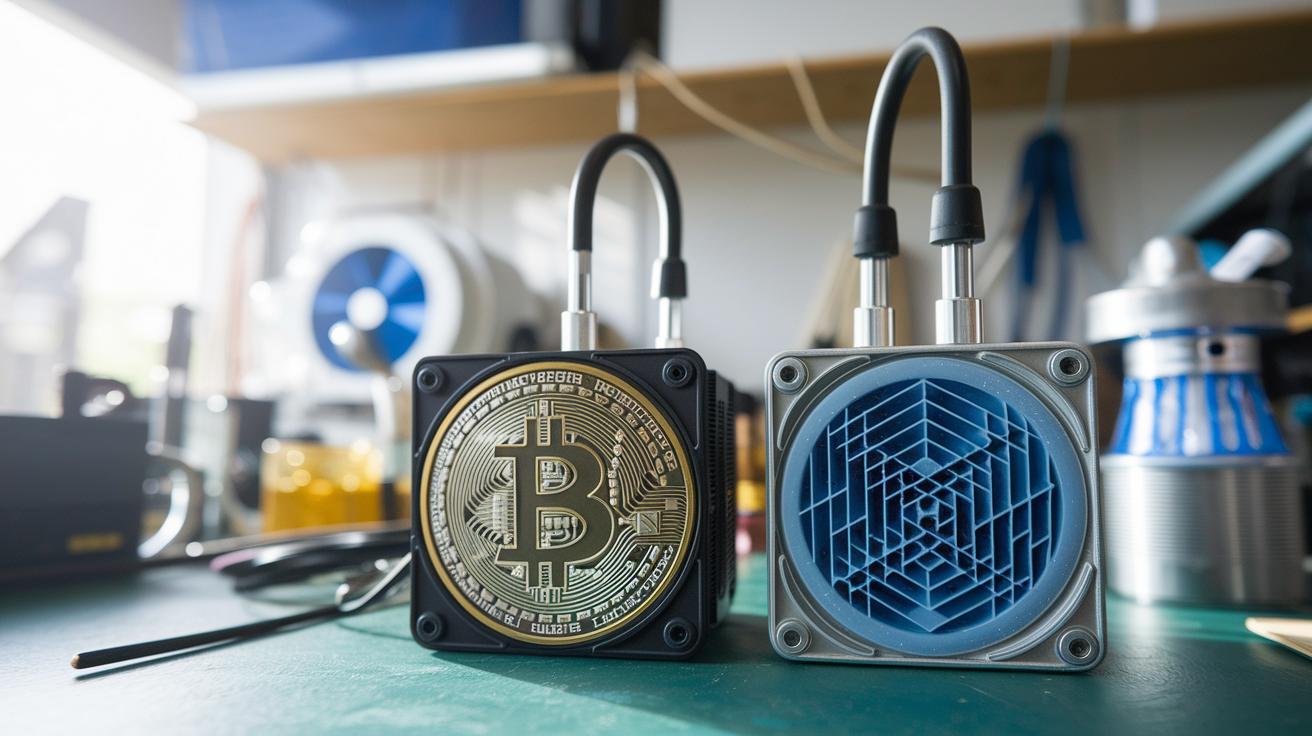
When it comes to Bitcoin ASIC miners, every design detail matters. The way chips, PCBs, heatsinks, and fans are arranged can determine how fast the miner works and how much energy it uses. Key points to consider include supported algorithms (like SHA-256 or Blake3), the design of the chip and its process node (which means the size of the chip’s parts), the maximum hash rate measured in Th/s or Gh/s, the total power draw in watts, energy efficiency (J/Th or J/Gh), and the type of cooling system used, whether it’s air-cooled fans or immersion.
Each element plays a big role in how the miner performs in the real world. For example, miners built for a specific algorithm tend to solve blocks faster. The chip’s design and process node also help control power use, which is crucial when running many machines together. A miner with an optimized cooling setup can maintain strong hash rates without overheating, leading to steadier performance over time. In short, a well-crafted miner not only delivers higher output but also cuts down on energy costs, making it a smart choice for both small setups and large mining farms.
Deep Performance Analysis of Leading Bitcoin ASIC Miners
Bitmain Antminer S21 Pro
The Bitmain Antminer S21 Pro is a real workhorse, hitting 234 Th/s (that means it can crunch through 234 trillion calculations every second) at 15 J/Th, using 3510 W of power. Its performance is rock-solid, making it a favorite for professional mining farms. The firmware is tried and true, so it keeps running smoothly around the clock. Imagine a busy mining facility where every unit stays on track all day without a hitch.
MicroBT Whatsminer M66S Hydro
The MicroBT Whatsminer M66S Hydro cranks out 298 Th/s at an energy rate of 18 J/Th, drawing 5513 W. Its smart design uses immersion cooling, which means it’s partly submerged in a cooling liquid to keep temperatures in check, this helps boost its overall performance. This miner is especially great in settings where you need every bit of power without interruption, and the cooling tech can even help lower maintenance costs over time.
Canaan Avalon A1566
The Canaan Avalon A1566 runs at 185 Th/s with an efficiency of 18.49 J/Th while using 3420 W. It relies on an air-cooling system, using fans to keep things moving, which makes it a reliable option for long-term use. This miner is a smart pick for operators looking to balance initial costs with steady performance, especially in smaller setups where keeping expenses low is key.
Comparing these three models, the Antminer S21 Pro leads with the highest throughput, giving you the most raw performance. The Whatsminer M66S Hydro leans on advanced cooling technology to maximize power, while the Avalon A1566 offers a balanced approach with good energy use and cost efficiency. The best choice really comes down to the scale of your operation and whether you’re more focused on the cutting-edge power or smart cost management.
Energy Efficiency and Cooling Solutions in Bitcoin ASIC Miner Comparison
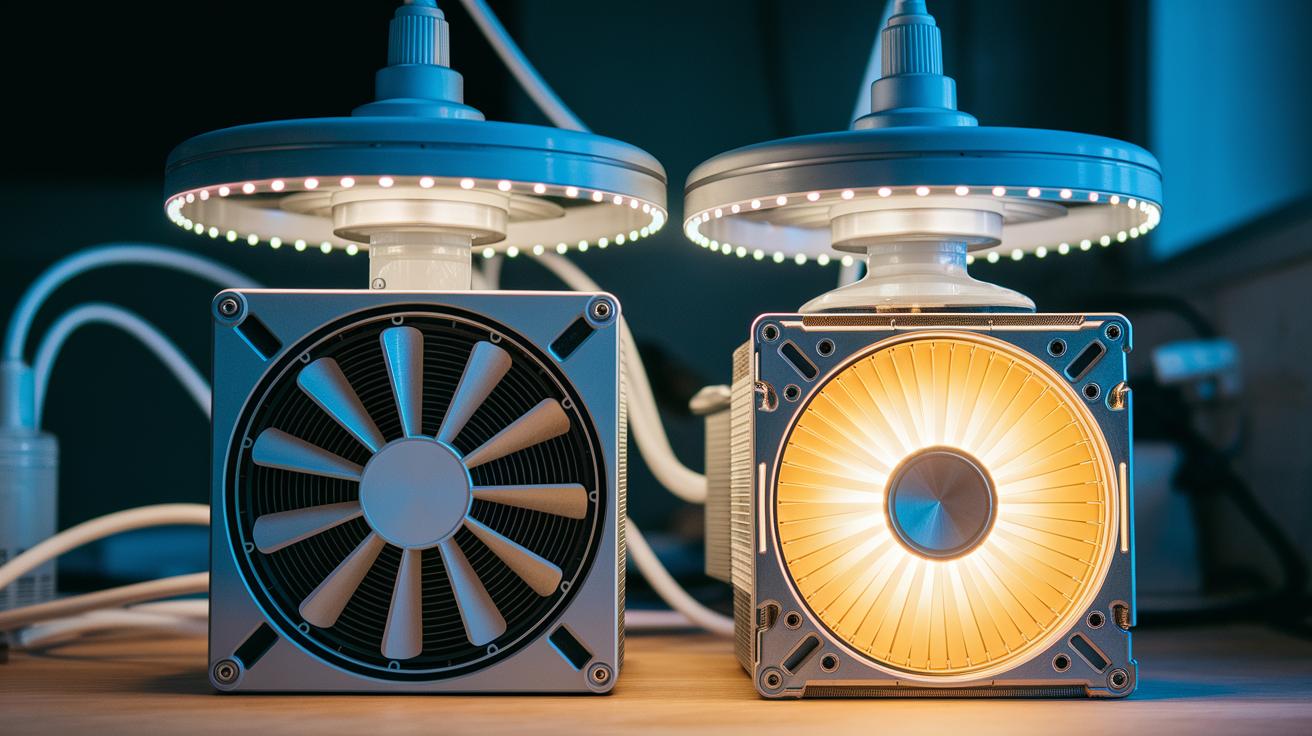
Mining Bitcoin around the clock means your ASIC miners run non-stop, so every bit of wasted energy adds up fast. Keeping these machines cool isn’t just about boosting performance, it also helps them last longer and keeps your mining operations running smoothly.
Air-cooling systems use fans to push heat away, making them pretty simple to set up and manage. Sure, they're easy to handle, but they can be noisy and sometimes don’t keep the temperature in check as well as you'd like. On the flip side, immersion cooling uses liquid baths to keep the equipment cool, which works wonders at tackling hot spots. For example, when you see the S21 XP Hydro doing the job at 12 J/Th (which means it uses 12 joules for every terahash it produces) compared to the S19k Pro at 23 J/Th, it’s clear that immersion cooling is a lot more energy efficient. Plus, it cuts down on the noise that air-cooling systems can create, even though setting it up might take a bit more planning, especially for big operations.
At the end of the day, both heat and noise can affect where you set up your mining site and your overall running costs. So, picking the right cooling method isn’t just about saving energy, it’s also about keeping things quiet and under control.
Cost, ROI, and Profitability Comparison of Bitcoin ASIC Miners
When comparing prices based on terahash, you'll see that brand new miners like the S21 Pro cost around $23.87 per terahash. In contrast, older models or those bought on the secondary market, such as the S19k Pro, come in at about $10.76 per terahash. This difference in price really influences your initial buying decision. While a lower price might look appealing, keep in mind that it often means dealing with older tech that may not match the latest performance or energy standards.
Electricity costs are another key factor in running these miners. Here, efficiency is measured in joules per terahash (J/Th), which shows how much power a miner uses. Simply put, a miner using 15 J/Th will save you money on your monthly bill compared to one using 23 J/Th. With local electricity rates in the mix, even small differences in energy use can lead to big savings and better overall profitability.
Payback periods for these machines can differ a lot. Depending on Bitcoin's price and the mining network's difficulty, you might see your investment return in just a few months, or sometimes it could take a year or more.
Market Trends and Future Innovation Comparison in Bitcoin ASIC Miners
New ASIC miners are making a big splash by nearing energy use of 12 joules per terahash, thanks to breakthrough 3 nm chip processes and clever hydro cooling designs. Just imagine a miner that uses only 11 joules per terahash, this efficiency is like watching a high-performance engine running on minimal fuel.
At the same time, the market is buzzing with ideas like immersion cooling, open-source firmware, and modular rig builds that make daily operations a lot simpler and quieter. Immersion cooling keeps temperatures steady and cuts down on noise, while open-source firmware lets you tweak settings like overclocking (boosting performance by running components faster) and dynamic voltage scaling (adjusting power use on the fly). And modular rigs? They make upgrades and repairs as easy as swapping out parts on a sports car engine.
The price per terahash is expected to drop even more as global chip production improves and new manufacturing methods get adopted. By early 2025, many believe that next-generation ASIC miners will not only be more affordable but also even more energy efficient and reliable, making them a hot pick for both longtime and new mining operations.
Final Words
In the action, this post broke down the key parts of a bitcoin ASIC miner comparison. We mapped out technical specs, performance metrics, energy efficiency tactics, cost insight, and market trends. Each section made it easy to see how factors like hash rate and power draw shape miner value. Bit by bit, the details add up to guide smart picks for effective investments. Keep an eye on these trends as they brighten the outlook for your next steps in mining.
FAQ
What does a Bitcoin ASIC miner comparison chart show?
A Bitcoin ASIC miner comparison chart shows key specifications such as hash rate, power consumption, and efficiency ratings to help you quickly decide which model meets your mining needs.
What is the best ASIC miner for Bitcoin?
The best ASIC miner for Bitcoin depends on your goals; models like Bitmain’s Antminer S21 XP Hydro deliver high performance with balanced power draw and efficiency for demanding miners.
Which Bitcoin miner is most profitable?
Bitcoin miner profitability depends on balance between hash rate and energy consumption, with units like the Antminer S21 Pro often emerging as profitable when local electricity costs are factored in.
Which ASICs are best for mining Bitcoin?
ASICs designed for Bitcoin mining focus on the SHA-256 algorithm, and top options include Bitmain’s Antminer series and other models offering strong throughput and competitive energy ratings.
How long does it take to mine 1 Bitcoin with an ASIC miner?
Mining 1 Bitcoin with an ASIC miner can take weeks or months depending on the miner’s hash rate, current network difficulty, and your local power costs, so actual times vary widely.
How is ASIC miner profitability calculated?
ASIC miner profitability is calculated by combining the miner’s hash rate, power consumption, network difficulty, and local electricity prices, often using an online calculator to provide estimated earnings.
What factors determine ASIC miner value?
ASIC miner value is determined by performance measures like hash rate, power draw, energy efficiency, market demand, and operating expenses, allowing buyers to compare cost-effectiveness across models.
What functions does a Bitcoin mining calculator perform?
A Bitcoin mining calculator estimates potential earnings by inputting hardware specs, electricity rates, and network difficulty, providing a quick snapshot of expected profitability.
What is Bitmain known for in Bitcoin mining?
Bitmain is known for manufacturing leading ASIC miners that set industry benchmarks in performance and efficiency, making their products a common choice in professional mining operations.


