
Ever thought your Bitcoin mining setup might be secretly draining more money than you expect? Every extra watt can make a big difference, and even tiny changes in power use might swing your profits. Knowing how electricity adds up is key to keeping more money in your pocket. This guide walks you through the costs step by step, showing how your rig's wattage, run-time, and power rates come together. Curious about how a few smart tweaks could boost your profit? Let’s dive in and see how you can transform your power bill into real gains.
Calculating Bitcoin Mining Electricity Costs
Tracking how much you spend on electricity for Bitcoin mining is pretty straightforward. You just use this formula: Electricity Cost = (Rig Wattage divided by 1,000) times the number of hours you run your rig each day times the electricity rate in dollars per kilowatt-hour. Here, the rig wattage is the power your mining equipment uses; the hours per day is how long your machines run; and the rate is what you pay for each kilowatt-hour. When you mix these together, you get your daily cost.
Imagine your mining rig runs all day, 24 hours at a constant power draw. That fixed wattage combined with a set electricity rate gives you everything you need to calculate your expense. While there are handy tools like a Bitcoin Mining Calculator or a Bitcoin Profit Calculator, knowing the formula helps you see how each part adds up.
| Input | Value | Description |
|---|---|---|
| Rig Wattage (W) | 3,000 W | Total power used by your ASIC units |
| Operational Hours (h/day) | 24 | Assumes the rig runs non-stop |
| Rate ($/kWh) | 0.07 $/kWh | Average cost in a U.S. home |
| Daily Cost ($) | 5.04 | The cost calculated each day |
Small changes in these numbers can really shift your spending and affect how profitable mining can be. If your rig draws a bit more power or if rates rise during busy hours, your daily cost can go up quickly. On the flip side, running your equipment when rates are lower, or choosing more efficient hardware, can help keep your expenses in check. This sensitivity to the details makes it super useful to rely on a trusted electricity cost calculator while you navigate the costs of mining.
Breaking Down Power Usage in Bitcoin Mining Rigs

ASICs are like the muscle in Bitcoin mining, offering a lot more crunch power per watt than GPUs. Think of it as comparing a race car to a family sedan, ASICs are made just for high-speed mining, while GPUs are multi-taskers that aren’t as focused on efficiency. This difference helps miners get the most work done with every bit of energy.
Choosing the right power supply is key. Most mining rigs use 80 PLUS certified power units, which come in different levels like Platinum, Gold, Silver, and Bronze. A Platinum unit wastes very little energy, meaning almost every watt counts. On the other hand, a Bronze-rated unit might waste extra energy as heat, which can slowly drive up costs over time.
Cooling is just as important as power efficiency. Whether it’s through good airflow or a liquid cooling setup, keeping a rig cool helps every part run smoothly. When each component stays at the right temperature, the system works better and uses energy more wisely.
Comparing Bitcoin Mining Electricity Rates Across Regions
Electricity prices can be a real mixed bag depending on where you are. Local grid conditions, how much energy is available, and even government policies shape these rates. It’s like each region has its own story, with some spots enjoying lower bills naturally and others grappling with higher costs.
Take parts of Texas, for example. In these areas, prices can drop a lot during off-peak hours. Between 1 AM and 4 AM, energy rates can even go negative, which means miners get a credit rather than a bill. This perk allows operators to ramp up mining during these off-peak times, cutting one of their biggest expenses and boosting profits.
Over in Sichuan, China, many miners lean on hydroelectric power. During the rainy season, they might pay as little as $0.02 to $0.05 per kilowatt-hour (that’s the cost for a unit of electricity). That’s a sweet deal for keeping their operations humming. Meanwhile, in places like Inner Mongolia, shifts in local energy policies have forced miners to rethink their game plan. There, a jump from $0.03 to $0.06 per kilowatt-hour pushed some operators to find regions with steadier pricing.
All in all, watching these energy rates closely is key. When miners snag cheaper electricity or take advantage of off-peak pricing, they can really lower their costs. Have you ever noticed how a small change in prices can ripple out into big savings? It’s this keen observation of trends that helps keep mining profitable in such an energy-sensitive field.
Strategies to Optimize Electricity Costs in Bitcoin Mining
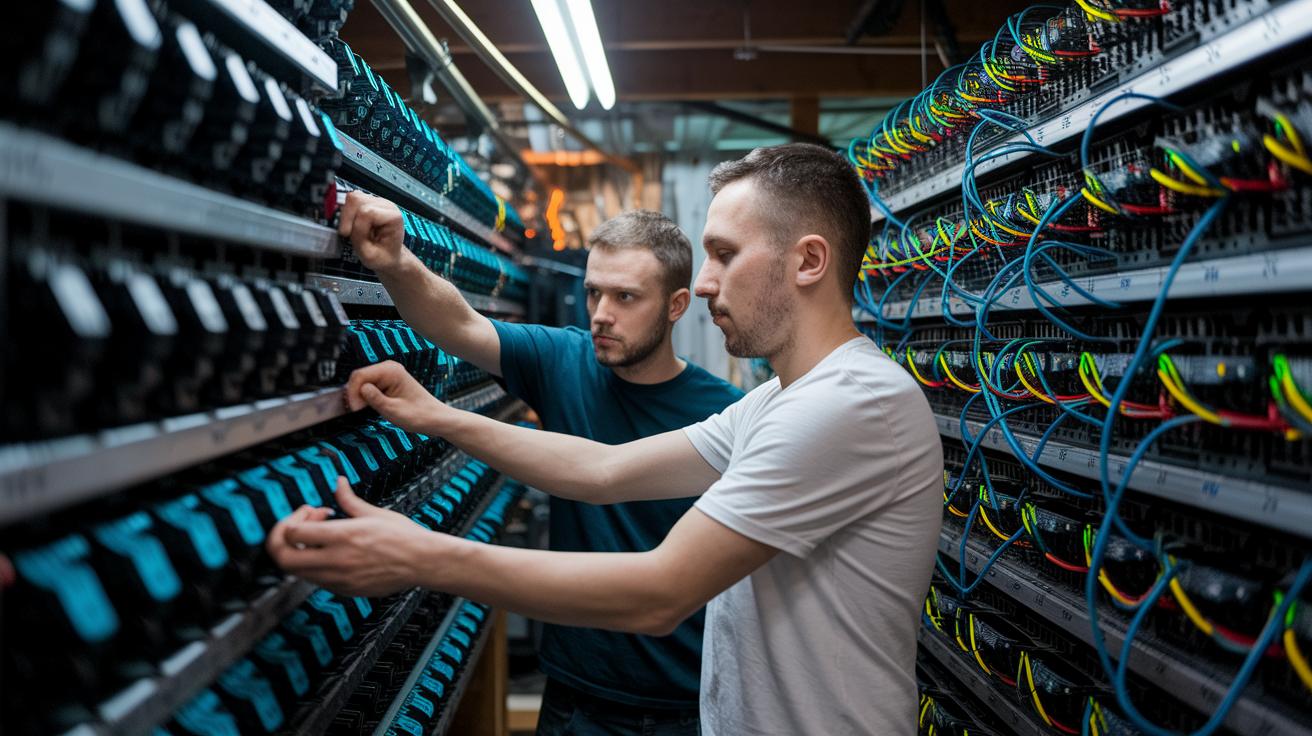
When it comes to lowering your electricity bill in Bitcoin mining, a mix of hardware and software tweaks really makes a difference. You can start by adjusting software settings like reducing voltage and frequency, which can lower your power draw by around 10 to 20 percent. At the same time, upgrading your hardware ensures that every watt is used wisely. Even small improvements here can add up, helping your mining operation run smoother and boost your profits.
Here are some simple tactics you might consider:
- Underclock ASICs so you get more watts-per-hash.
- Switch to 80 PLUS Platinum PSUs.
- Try immersion or liquid cooling to keep things efficient.
- Set your mining schedule during off-peak or even negative-rate times.
- Sign up for demand-response and time-of-use programs.
- Negotiate long-term bulk power contracts.
It's important to measure how much you save with each change. Start by figuring out your current power costs, then introduce one change, like underclocking your ASICs, and watch how your bill shifts over time. Tools such as a Bitcoin Profit Calculator can help you see the exact savings. For example, if lowering the voltage saves 10 to 20 percent on power costs, compare that against any small dip in mining output. Investing in a Platinum-rated PSU might cost more up front, but its better efficiency means less wasted power and lower bills later on. Similarly, efficient cooling systems, be it liquid or immersion cooling, not only cut down on wasted energy but also keep your system’s performance on track.
Another idea is to run your mining during off-peak hours. Even negative-rate times can shave costs right off your bill. Plus, getting involved in demand-response programs and securing long-term bulk contracts can lock in lower rates. By keeping an eye on these expenses and adjusting your approach based on real savings, you can strike the right balance between high performance and energy efficiency, all while making your mining venture more profitable.
Utilizing Renewable Energy Options in Bitcoin Mining
Bitcoin mining can be both eco-friendly and budget-smart when you switch to renewable energy. In places like Sichuan, for example, hydroelectric projects have driven down electricity rates to as little as $0.02 to $0.05 per kilowatt-hour. That means water power not only cuts costs but also supports cleaner, low-carbon operations.
Solar power is another attractive pick, though it does come with a twist. Since solar panels only produce energy during the day, miners need battery storage for nighttime work, which can push up the initial costs a bit. And if you mix wind with solar power, you can often get continuous power around the clock. But even then, these systems sometimes need a grid tie-in to make the most of extra energy during peak times.
There are also some lesser-known but clever solutions. Options like capturing methane gas or using stranded natural gas turn what would be wasted energy into something valuable. Plus, some miners are even exploring grid-balancing incentives to drive down their costs even further.
Sure, these renewable options may require a hefty upfront investment, but they tend to offer stable, long-term rates. For miners looking to combine cost efficiency with predictable and sustainable power, the rewards can really pay off over time.
Real-World Case Studies in Bitcoin Mining Electricity Cost Management
Case studies give you clear, actionable tips to cut costs and boost efficiency. They show how even small changes can lead to big savings. For instance, a mining operation in Wyoming switched from using usual air cooling to immersion cooling and managed to cut their power bills by 50%. Imagine that, a simple change slashing costs in half!
Some operators in North America tweak their schedules to take advantage of off-peak pricing when rates are lower or even negative. In Texas, miners shift their activities to overnight hours, which helps reduce electricity expenses even when regional rates seem steep. One case even highlights how smart scheduling combined with a fresh cooling method can dramatically drive down costs.
Over in Asia, dynamic market changes force rapid adjustments. In Inner Mongolia, steep hikes in power rates pushed some miners to shut down, while in Sichuan, operators make the most of affordable hydroelectric power and even turn a profit by selling extra electricity during peak times. It’s striking to see that when local policies change, adapting operations can mean the difference between a shutdown and extra income.
These real-world examples underline the importance of regularly reviewing your operating expenses and comparing power efficiency. It’s a simple yet powerful way to keep mining profitable over the long haul.
Final Words
In the action, we broke down how to calculate daily expenses by using a simple formula with rig wattage, operational hours, and local rates. We examined how regional differences and effective energy management can shift profitability, even including renewable power options. Real-world examples further highlighted how smart tweaks can lead to noticeable savings. This bitcoin mining electricity cost guide offers clear, actionable insights for anyone looking to make smarter, positive decisions in their mining operations.


