
Ever wonder if the housing market is like a balloon ready to burst, or if it might offer us some great chances ahead? Picture home prices climbing higher as buyers and investors keep pushing them up.
A housing bubble happens when three things come together: easy credit (when people can borrow money without much hassle), high demand (lots of people eager to buy), and a shortage of homes (fewer houses available than needed). When these factors mix, prices can go well past their usual range.
Some recent data shows steady gains, and many experts believe the trend might keep rising. It makes you think twice about the traditional views on buying a home. Let’s take a closer look at these trends and see what they could mean for you.
Housing Market Bubble Radiates Strong Optimism
Imagine the housing market like a balloon gradually inflating, with every extra puff of air representing a bit more money in home prices. In simple terms, a housing market bubble happens when home prices rise rapidly because of easy credit, high demand, and a shortage of available homes. This means prices can soar well above what we normally see.
What really drives this bubble? It often comes down to people and investors buying homes not just to live in them, but hoping to make a quick profit. Banks, too, play a part by offering loans at tempting rates which only fuels more spending. For instance, the S&P CoreLogic Case-Shiller Home Price Index showed a 3.9% yearly gain in February 2025. That’s a clear sign that prices are on a steady climb. The National Association of Realtors also predicts a median home price jump of 3% this year and 4% next year, suggesting the market might be getting a bit overvalued.
| Indicator | Value |
|---|---|
| S&P CoreLogic Annual Gain | 3.9% |
| NAR Forecast 2025 | 3% Median Increase |
| NAR Forecast 2026 | 4% Median Increase |
Add to that the fact that there aren’t many homes available, and you get a mix of steady demand and very limited supply which keeps the prices climbing. All of this creates an atmosphere filled with optimism for both investors and those looking to buy their dream home.
Historical Trends and Cyclical Crash Analysis in Housing Markets
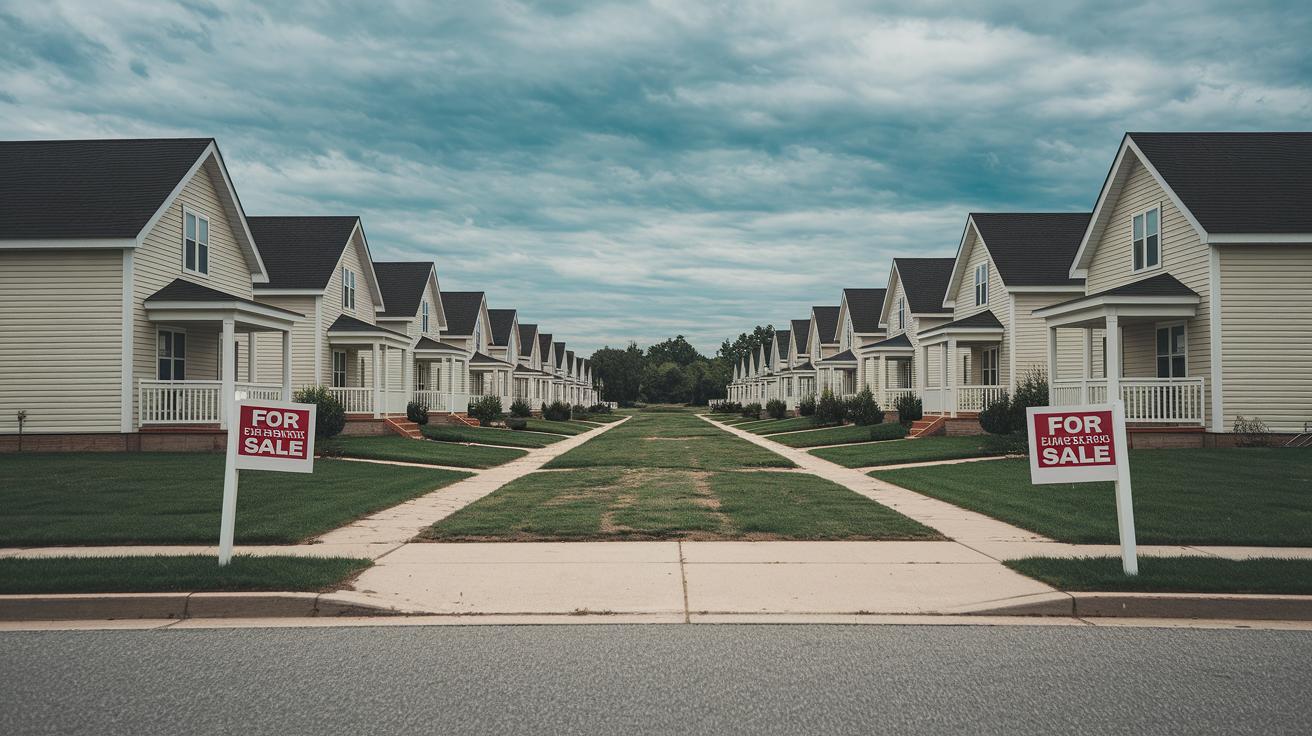
The housing market has been moving in an 18-year cycle since 1800, based on data from Chicago and all across the U.S. These cycles run through four clear phases that help us understand past bubbles and the crashes that followed.
It's surprising to learn that in the early 1800s, even when most of the country was rural, the early signs of these cycles were already there. During the recovery phase, high job losses and low land prices created a weak starting point. Many homeowners struggled to find work, which kept land prices low and left homes sitting unused.
Then comes the expansion phase. More people start moving into available spaces, pushing up rents as demand increases. Properties fill up quickly, and landlords feel confident enough to raise rates. It’s a bit like the buzz you feel right before the economy really takes off.
After that, we hit the hyper supply phase. Steady rent hikes inspire developers to build more homes. This burst of new construction, fueled by rising rental incomes, keeps the market active for a time, almost like the market reaching its high note before the tune changes.
Finally, the recession phase kicks in. Here, fewer people are renting or buying, and interest rates rise, tightening credit. It’s the start of a downturn when purchasing a home becomes much harder. We saw this clearly in 2008 with the subprime mortgage crash and the collapse of Lehman Brothers, both of which sent shockwaves through the market.
Each phase brings its own risks and rewards. By looking back at events like the 2008 Great Recession, we can better understand current trends and get ready for the shifts that might come next.
- Recovery: high unemployment, low land prices
- Expansion: above-average occupancy and rising rents
- Hyper supply: increased construction driven by steady rent growth
- Recession: falling occupancy and rising interest rates
Economic Triggers and Policy Drivers of Housing Market Bubbles
Low interest rates set by the Federal Reserve and relaxed lending rules have long been seen as key factors pushing up home prices. When banks offer loans at attractive rates, buyers can take on bigger mortgages than usual, boosting demand and driving property values up. Think of it like adding extra fuel to a fire, easier credit lights up the market.
In the first quarter of 2025, U.S. household debt hit a record $18.2 trillion, with 11.3% of income going toward paying it off. This shows that even though people are borrowing more, most are managing their payments, for now. But things can shift quickly if interest rates rise. For example, when rates went up last year, buyers ended up paying much more in interest, which cut into how much home they could afford. If you're curious, checking out current mortgage rate trends can offer more insight.
Relaxed lending standards are another big piece of the puzzle. They let in buyers who might have been considered too risky before. This easier access to credit can push property prices higher at a rate that isn’t sustainable, adding to the risk of a bubble. There’s growing talk about whether tightening credit and raising rates could stabilize the market by slowing down borrowing.
Then there are the credit instruments themselves. Sometimes, complex financing methods hide the real level of risk, making it hard for both buyers and investors to see when the market is heating up too much. Combined with the current borrowing environment, these factors mix together to push home prices even higher.
Regional Case Studies on Housing Market Bubble Dynamics

Across regions, housing markets have their own unique quirks, yet many share those same bubble-like signs. In Canada, cities like Vancouver and Toronto have drawn a lot of attention due to rising prices and lively investor activity. Ever notice how in Toronto even a tiny price jump can spark a rush among buyers, kind of like scrambling for the last slice of a favorite pie?
Over in China, the market tells a cautionary story. Houses in some areas lie mostly empty, these are often called ghost cities, and heavy developer debt adds extra risk. Imagine whole neighborhoods, built with high hopes, ending up eerily quiet. It’s a clear sign that there are deeper problems at work.
Australia faces its own hurdles. In major cities like Sydney and Melbourne, finding an affordable home is a serious challenge because the supply is tight. Picture the hunt in Sydney: searching for a reasonably priced home can feel like looking for hidden treasure in a complicated maze.
The United States has plenty of its own drama too. In California, record-high prices are bolstered by strong investor demand. In Orange County, prices soar as demand outstrips a shrinking supply. Meanwhile, Denver’s market can feel like a roller coaster, with fast swings in value that bring both high peaks and sudden drops. And in Dallas, recent market adjustments highlight a natural shift in home valuations.
| Region | Key Issue |
|---|---|
| Canada (Vancouver, Toronto) | Price growth and active investor participation |
| China | High developer debt and ghost cities |
| Australia (Sydney, Melbourne) | Affordability challenges amid limited supply |
| USA (California, Orange County, Denver, Dallas) | Record-high prices, valuation swings, market corrections |
Warning Signs of an Imminent Housing Market Bubble Burst
Right now, buyers and sellers should pay close attention to fresh benchmarks and new rules that set today's warning signs apart from old trends. For instance, studies show that if the vacancy rate climbs by 7% in a quarter, it signals a sharp drop in demand. In some suburbs, a 3% jump in unsold homes over a single month already pointed to a sudden shift in buyer habits, pushing local officials to act quickly.
Today's real-time data reveals new occupancy markers that differ from the past. When urban areas see a drop of over 10% in long-term occupancy, it’s like having an outdoor concert that used to be packed now only filling a third of the seats. This kind of gap nudges government agencies to reexamine housing policies.
Keep an eye on mortgage rates, too. Recent trends suggest that when these rates rise by 1.5 percentage points in six months, buyer activity takes a sharp dive. Investors are now shifting their money into short-term securities, while government bodies gear up with tailored financial measures.
| Indicator | New Threshold | Market Reaction |
|---|---|---|
| Unsold Inventory Increase | 3% monthly spike | Rapid sentiment shift |
| Occupancy Rate Decline | Over 10% drop vs historical average | Policy review trigger |
| Mortgage Rate Hike | 1.5-point rise in six months | Sharp contraction in buyer activity |
Other key indicators include a surge in unsold homes that deviates from normal levels, occupancy rates dropping beyond set regional limits, and fast-rising mortgage rates that prompt policy actions.
By watching these updated markers and real-time changes, investors can quickly spot shifts in market dynamics. This awareness helps them make smart, timely decisions and adapt policies to the changing landscape.
Forecasting Housing Market Bubble Collapse and Future Trends

Traditional forecasts have us thinking that median home prices will inch up by about 3% next year and 4% the following year, according to housing market predictions for 2025. But new signals suggest we might need to rethink that outlook. Shifts in tech trends, buyer habits, and even global economic moves are changing the game well beyond simple supply and demand.
New technology is poking holes in the old pricing model. AI-driven tools and online mortgage platforms are speeding things up, giving us near-instant data insights. For instance, digital mortgage platforms can now finish approvals in just minutes, which means buyers are moving from interest to purchase quicker than ever. This rapid pace is now a key part of updated models that really capture how fast the market can turn.
Younger buyers are also shaking things up. They tend to favor lively urban spots and mixed-use properties over the familiar suburbs. Using digital tools to help them decide, these buyers generate fresh data that analysts can use. This trend could push investment strategies to explore a wider mix of property types and locations.
Global economic factors add more layers to the picture. Changes in trade, swings in commodity prices, and shifts in international policies can all influence construction costs and investor moods. One expert even said, "As global markets react to sudden economic shifts, local housing trends could see adjustments that past models may not fully capture."
Key emerging indicators include:
- Fast technology that smooths out transactions
- Shifting buyer preferences and profiles
- Global economic changes affecting construction and investment
| Indicator | Potential Impact |
|---|---|
| Technological Advancements | Quicker data analysis and speedier mortgage approvals |
| Changing Buyer Demographics | A shift toward diverse housing styles and increased urban demand |
| Global Economic Trends | Fluctuations in construction costs and shifting investment patterns |
Risk Management Strategies Amid a Housing Market Bubble
When housing prices soar, it feels like you're walking on thin ice. Keeping your money safe means using smart, simple steps. One great idea is to spread your real estate investments across different areas and types of properties. This way, if one investment stumbles, the others can help cushion the fall. And if you invest in properties that bring in steady cash, it acts like a safety net when the market gets shaky.
Another smart move is to lock in a long-term, fixed-rate mortgage when interest rates are low. This means you won't have to worry about sudden rate hikes that could mess up your monthly budget. I recall someone saying, "I locked my mortgage rate for 30 years at 3.5%, and that decision really helped me during market shifts." Stable financing like that boosts your confidence, giving you peace of mind as an investor.
It’s also important to stress-test your portfolio. Just like a pilot checks every system before takeoff, you should review your credit risk metrics (the numbers that tell you how risky your loans can be) and use cautious estimates when valuing your properties. These regular checks help catch issues early before they cause bigger problems.
Keep an eye on any unusual signs in your investments. For instance, if a property suddenly shows many vacancies or its pricing becomes unpredictable, these are clear warning signals. Imagine it as a little light on your dashboard telling you that it might be time to switch up your strategy.
Simple, actionable steps include regularly updating your portfolio, rebalancing your mix of assets, and closely tracking your credit exposures. These tactics help keep your investments resilient in the face of any market twists.
| Strategy | Benefit |
|---|---|
| Diversification | Spreads risk across markets |
| Fixed-Rate Financing | Stabilizes payment amounts |
| Stress Testing | Identifies portfolio vulnerabilities |
Final Words
in the action, we explored what sparks a housing market bubble, from rapid price surges and low supply to shifts in credit and policy. We tracked historical cycles, compared regional trends, and spotted key warning signs before a bubble burst. Risk management strategies helped show how investors might protect their portfolios amid market twists. It’s a mix of solid data and smart insights that lights the way forward. The market remains full of promise, helping investors feel ready to tackle tomorrow with confidence.
FAQ
Housing market bubble reddit
The housing market bubble discussion on Reddit centers on community insights that highlight rapid price increases driven by low inventory and speculative buying, with users sharing personal experiences and local data to gauge market trends.
Housing market bubble prediction
The housing market bubble prediction points to fast price surges fueled by easy credit and high demand, yet current data and historical patterns suggest these trends are tempered by low inventory and steady economic fundamentals.
When will the housing market crash again
The timeline for another housing market crash remains uncertain. Past cycles show downturns after periods of growth, but current low inventory and gradual rate hikes suggest any adjustment may be more measured than a sudden crash.
Housing market crash before 2008
Historical analysis indicates that the pre-2008 crash resulted from rapid credit expansion and risky lending practices, which eventually led to a sharp correction in prices when market imbalances became unsustainable.
Will the housing market crash in 2025
Forecasts for 2025 indicate modest home-price rises and limited inventory, which combine to reduce the likelihood of a significant market crash despite ongoing market pressures and rising borrowing costs.
What happens when a housing bubble bursts
When a housing bubble bursts, property prices can drop sharply as unsold inventory builds up and lending standards tighten, prompting both buyers and sellers to adjust their expectations rapidly in response to financial pressures.
Real estate forecast next 5 years
The real estate forecast for the next five years projects steady price increases with mild corrections, as rising interest rates and continued low inventory contribute to a balanced market where dramatic shifts are less likely.
Will the housing market crash in 2026
Projections for 2026 suggest continued upward price trends with only moderate slowing; strong demand and low supply are expected to prevent a sharp, sudden drop in home values during that period.
Is the housing bubble about to burst?
Current market data indicate that while some bubble-like characteristics exist, such as rapid price growth and speculative interest, strong demand coupled with limited inventory makes an imminent burst less likely.
Are home prices dropping in Mississippi, Florida, and Connecticut?
Regional trends vary; some local markets might experience price corrections due to unique supply conditions, but overall, broad indicators show that average home values are supported by steady demand, limiting widespread price drops.


