
Ready for some surprising news about gold? Even after a short break, gold is hinting at a comeback. Technical tools, like moving averages (which help us see when prices might change), suggest that this small dip could be getting things ready for a quick rebound, kind of like taking a short rest before a burst of energy. Current trends hint that the market is paving the way for future gains. In this discussion, we break down these market moves and show why they might brighten the outlook for investors.
In-Depth Current Gold Market Trends
Spot gold eased off after hitting a multi-week high, touching resistance at $3,365 per ounce before pulling back. During the American session, prices briefly dipped to about $3,319.75, mostly due to a strong US Dollar. It’s kind of like watching a car slow down at a red light, you suddenly notice the signal controlling its pace.
Taking a closer look with technical tools, indicators like Fibonacci levels (which help show where prices might reverse) and moving averages (that smooth out price changes) shed light on gold’s steps. Gold dropped roughly 38.2% from $3,452.51 to $3,247.83, then bounced back toward the 61.8% level at $3,374.56. The EMA50, a type of moving average, has been key in easing the downward trend, giving gold a chance to rebound. On daily charts, gold sits above a slightly bearish 20-day SMA, while the longer-term 100-day and 200-day SMAs are below the current price. This combo suggests that what seemed like a downtrend might actually be a foundation for future gains, like a gentle push that encourages recovery.
When you look at different trading sessions around the world, the picture becomes even clearer. The American market shows more sudden moves, while Asian and European sessions bring a steadier flow. Even though short-term shifts can feel a bit choppy, the overall signals point to resilience and a hopeful outlook for gold’s price dynamics.
Historical Price Movements in Gold Market Trends

In Q1 2025, gold moved above $3,000, marking a clear shift driven by central banks diversifying their investments. This change has helped keep prices above the levels seen before 2020 and now sets a new benchmark for how bullion is valued.
| Date | Price | Event |
|---|---|---|
| March 15, 2025 | $3,010 | Breakout above $3,000 |
| July 5, 2025 | $3,452.51 | Recent high before retracement |
| July 7, 2025 | $3,247.83 | 38.2% retracement observed |
| July 17, 2025 | ~$3,374.56 | Bounce toward 61.8% retracement |
These earlier price shifts give us a fresh look at today's market strength. They show that every dip and rebound is part of a natural cycle, much like how a small drop in market data can quickly turn around to boost confidence. It’s interesting to see that these long-standing patterns, combined with current trends, add depth to our understanding of gold’s price journey.
Technical Analysis Approaches Within Gold Market Trends
The moving-average approach helps traders figure out gold trends by smoothing quick price jumps. The EMA50 acts like a quick brake when the market slows, while the 20-day SMA hints at a slight lift even when the 100-day and 200-day SMAs stay lower. It’s like a driver easing off the gas as they come to a stop sign, keeping the ride smooth.
Oscillators and Fibonacci retracements also offer clues about when gold might change its pace. The RSI, for example, warns when the market is oversold, kind of like a runner pausing for a moment before a final burst of energy. Fibonacci levels, such as 38.2% and 61.8%, serve as clear markers on a racetrack, indicating where price corrections might reverse. Imagine a runner taking a quick rest at a checkpoint before speeding up again.
Different trading sessions show unique market moods through volatility and momentum signals. The American session often brings sharper price moves, while Asian and European sessions tend to be steadier. This helps traders adjust their plans, much like someone planning an outdoor activity by noting little shifts in the wind throughout the day.
Gold Market Trends: A Bright Investment Outlook
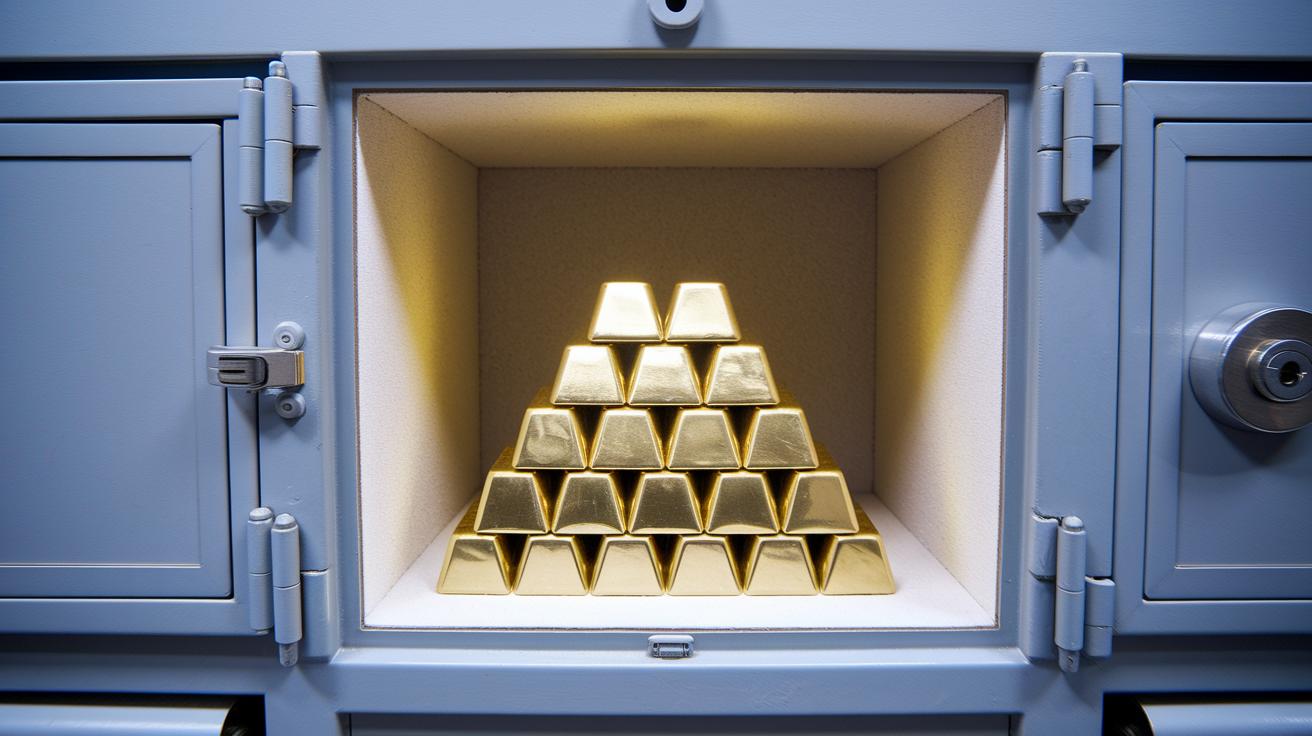
Many experts are keeping an eye on monetary policy, especially the idea of Fed rate cuts, because these moves often push gold prices higher. Lower interest rates mean you give up less when holding gold, which doesn’t earn interest, so it suddenly becomes a more attractive option. And then you have global currency shifts, if the US Dollar gets stronger, gold might not look so attractive. But if there's any hint that monetary policy might ease up, gold’s outlook improves.
Inflation is another big player. When prices rise consistently, central banks usually respond by tightening policy or making adjustments. This mix of high consumer prices and overall economic uncertainty pushes many people to view gold as a safe bet. It’s like during a wild storm, having an umbrella, gold is seen as a steady protector against inflation.
Countries like China and India are also stepping in, steadily adding more gold to their reserves as geopolitical tensions continue to simmer. Their moves tell us that many believe gold is a solid, reliable asset during uncertain times. Whether it's instability in areas like Russia-Ukraine or the Middle East, governments and institutions alike are looking to gold as a safeguard, boosting its reputation as a go-to investment when the economic road gets bumpy.
Forecast Scenarios and Predictions for Gold Market Trends
When we look at where gold might be headed, several near-term triggers and long-term factors come into play. For instance, if the Fed cuts rates and the dollar weakens, forecasts for 2025 put gold in the $3,500 to $3,700 range. This follows a cheerful break above $3,000. Looking ahead to 2027–2030, many expect gold prices to stay high, well beyond pre-2020 levels, thanks to growing fiscal pressures and central banks spreading out their investments.
There are a few possible ways this could unfold:
- Bullish Run – Imagine gold climbing into the $3,500–$3,700 zone because the Fed makes supportive moves and the dollar softens. This outcome hinges on central banks continuing to buy and a careful easing of monetary policy.
- Bearish Pullback – On the flip side, easing geopolitical issues, persistent inflation, and lackluster US-China trade might drag gold prices down below today's levels.
- Neutral Plateau – If things stay balanced without any dramatic shifts, gold could keep steady within its current range, showing little sign of wild moves.
- Volatile Fluctuation – Think of a more unpredictable ride where economic uncertainties and quick policy responses lead to rapid spikes and drops over the short term.
- Long-Term Elevation – Here, the ongoing pressure from fiscal issues and central bank strategies keeps gold prices buoyant, well above the levels seen before 2020.
Each of these scenarios involves a fair amount of uncertainty. It’s like trying to piece together a puzzle where every new geopolitical event, inflation change, or central bank decision can shift the picture. So, it’s important for anyone watching the market to stay nimble and ready to adjust their strategies as new data comes in.
Regional and International Outlook for Gold Market Trends

Central banks' reserve strategies really shape how gold is priced in different parts of the world. In Asia, especially in countries like China and India, banks are busy boosting their gold holdings. Meanwhile, many Western banks seem to be taking a break from buying. Think of it like shopping at two local stores: one charges a higher price because everyone is rushing in, while the other has lower prices because fewer folks are interested. As these banks tweak their portfolios, they directly affect the price of physical gold in many regions.
Gold also has its own unique reaction compared to other investments during uncertain times. When markets get jittery and stock prices drop, gold often climbs, acting like a balancing force. In emerging markets, strong local demand can stir up extra price swings and even some short-term instability. All these elements show that gold’s movement is part of a bigger picture, one where global trends meet local market moods.
Investor Sentiment and Safe-Haven Behavior in Gold Market Trends
When the world gets a bit shaky with economic twists and geopolitics, gold naturally steps in as a safe harbor. It’s the asset folks turn to when the market feels off, providing a sense of security in uncertain times.
As 2025 kicks off, both everyday investors and big institutions are increasingly betting on gold. Recent data shows more long positions, think of it like funds moving in and out of gold ETFs and shifts in futures trading. It's a bit like checking the weather before stepping out; this info helps investors guess if the market will clear up or stay murky.
Over in Asia, the picture gets even more interesting. Seasonal spikes in demand, driven by traditional jewelry purchases and major festivals, add extra momentum to the gold market. This rhythmic buying reminds us why gold remains a comforting, go-to choice no matter if times are booming or a bit rough.
Final Words
in the action, we tracked today's swift gold market trends, from its spot retreat under strong USD influence to the detailed play of Fibonacci levels and moving averages. The discussion covered technical signals, historical price swings, and the impact of global economic drivers on bullion. It also touched on forecast scenarios and regional dynamics that shape investor sentiment. These insights help build clarity in volatile markets and offer a positive outlook for gold market trends as you make your next informed decision.
FAQ
Q: What are the gold market trends today?
A: The gold market trends today show a short-term decline from recent highs mainly influenced by a strong US Dollar and technical resistance, leading to modest support and recovery signals.
Q: What do gold market trends look like for 2025?
A: Gold market trends in 2025 indicate a potential recovery thanks to easing Fed policies, continued safe-haven demand, and diversified central-bank bullion purchases, supporting steady price levels.
Q: How does the gold price chart look over the past 10 years?
A: The gold price chart over the past 10 years reveals long-term cycles with marked pullbacks and recoveries, reflecting overall growth above pre-2020 averages and shifts in investor sentiment.
Q: What is the silver price today?
A: The silver price today mirrors market volatility and safe-haven demand seen in gold, reacting to both economic uncertainties and geopolitical tensions impacting precious metal markets.
Q: How has gold price history evolved over time?
A: Gold price history shows key pivots, including a strong Q1 breakout above $3,000 and subsequent retracement patterns, which highlight shifts in market sentiment and ongoing investor interest.
Q: What do gold stocks indicate about market trends?
A: Gold stocks reflect investor confidence in mining operations and overall market trends, as they often mirror movements in physical gold prices and respond to economic and geopolitical events.
Q: How do live gold prices and the gold USD chart function?
A: Live gold prices and the gold USD chart offer real-time insights, showing spot price movements, technical support levels, and influence from USD strength that drives market volatility.
Q: What are the future trends and forecasts for gold?
A: Future trends for gold point to moderate gains if Fed cuts materialize and safe-haven demand stays firm, with forecasts suggesting prices could range between $3,500 and $3,700 per ounce in the coming years.


