
Ever wonder if a computer could handle your money better than a seasoned trader? AI investing uses smart algorithms that work like a digital guide, continuously tweaking your portfolio as market conditions change.
Imagine a tool that can spot market shifts in the blink of an eye, making trades without a moment's hesitation. These systems remove much of the guesswork by using data to show clear advice on when to buy or sell stocks.
Our article takes you through how these automated trading trends are reshaping the investment world. It’s a story of technology working hard behind the scenes to help you reach your financial goals.
AI Investing Fundamentals and Core Strategies
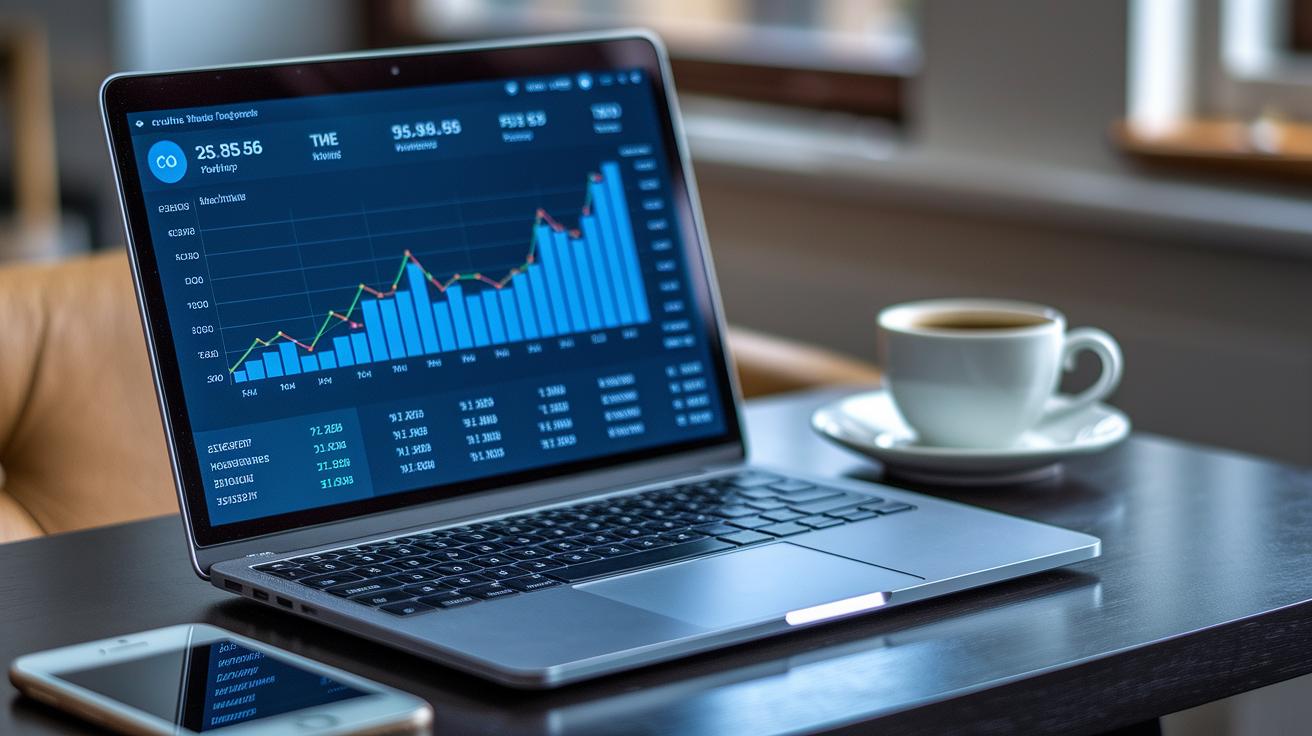
AI investing is like having a smart friend who helps you manage your money using computer algorithms. Think of a robo-advisor as your very own digital portfolio manager, it’s designed to keep your investments on the right track. Imagine a trading engine that works in milliseconds, rebalancing your assets automatically, just like an experienced trader who never sleeps.
At its heart, AI investing uses algorithms, kind of like detailed recipes based on data, to decide when to buy or sell. This means that instead of relying on gut feelings, the system makes choices based on numbers and trends. For example, these platforms keep an eye on market shifts and adjust your portfolio in real time to match your risk comfort. It’s like having someone constantly fine-tuning your investments as conditions change.
Big-name investment firms, some with roots going back to the early 1990s, now mix their seasoned market knowledge with these modern, data-powered tools. They use everything from historical prices and trading volumes to even the mood of the news to make smart decisions. Really, these AI tools take much of the guesswork out of investing, offering clear, data-backed insights to help manage your wealth.
By using AI, investors can pick stocks and manage risks more precisely. This transforms old-school investing into a smoother and more efficient process, helping you feel more secure about your financial future.
AI-Driven Portfolio Management Tools

Imagine a tool that not only rebalances your portfolio but also uses smart data and past trends to spot opportunities and manage risks. These systems dig into historical data, market clues, and even the mood of the market to fine-tune what investments fit best for you. Picture a sudden market hiccup that causes the system to quickly recheck your risk levels and shift your assets as needed.
This smooth blend of non-stop risk checks and super-fast trade execution really boosts your decision-making power. Below is a table showing how these features work together:
| Feature | Description |
|---|---|
| Enhanced Predictive Analytics | Combines past data, market clues, and sentiment checks to predict trends accurately |
| Continuous Risk Assessment | Keeps an eye on risks all the time and adjusts your portfolio as new data arrives |
| Ultra-Fast Trade Execution | Executes trades in mere microseconds to grab quick market opportunities |
For instance, when the market suddenly gets choppy, the system might dial down investments in riskier areas and boost holdings in steadier ones. This smart approach helps keep your portfolio balanced and ready for whatever comes next.
Algorithmic and Quantitative Trading in AI Investing

Algorithmic trading starts with computers following a set of simple rules based on past market data. Think of it like a recipe that tells you exactly when to buy or sell by spotting changes over time. The programs use time-series analysis, which really just means they check price patterns over days, weeks, or even minutes.
Machine learning forecasting goes even further. It teaches computers to learn from past data so they can predict what might happen next. For instance, neural network forecasting acts like a smart engine that picks up sudden shifts in market mood in real time. Imagine an engine crunching thousands of data points in a flash to decide the next move.
Another popular method is statistical arbitrage. Here, traders look for small price differences between similar assets and then jump in to profit from these gaps. At the same time, reinforcement learning adjusts portfolios bit by bit to find the right balance between risk and reward, kind of like fine-tuning a radio until you catch the perfect station.
Before any real money is used, firms test these models on historical market data, a process called backtesting. This step is all about making sure the strategy works before it goes live. When the backtesting shows good results, the automated systems start trading according to clear, unbiased rules. By blending traditional quantitative methods with AI-driven signals, trading becomes faster and more precise. It’s like replacing guesswork with solid, data-based decisions that keep pace with a market that never sleeps.
AI Investing Examples: Leading AI-Powered Stocks

Here are ten companies that use smart programs to boost capital growth. Their use of machine learning (a way for computers to learn from data) is shaping the financial markets we see today.
-
Nvidia: This company leads the data center chip market by capturing between 70% and 90% of it. Think of Nvidia like a powerful engine running behind advanced AI projects, a chip so fast it can crunch millions of data points in just seconds.
-
ASML Holding: Every year, ASML dedicates about 4.3 billion euros to research in extreme ultraviolet lithography (a high-tech way to create tiny computer circuits). Its solid backlog of work and state-of-the-art semiconductor technology make it a favorite among tech lovers.
-
Microsoft: With 1.5 billion users of Office and growing interest in its Copilot subscriptions on the Azure AI platform, Microsoft shows how big cloud operations and AI can work together. It's like having a giant toolbox that makes business tasks a lot easier.
-
Lemonade: This insurer uses smart programs to process about 70% of its insurance claims almost instantly. Imagine filing a claim and getting a quick "approved" response, it’s as fast as saying the word itself.
-
SoundHound AI: Known for its edge-computing voice technology (which lets devices understand voice commands right where they are used), SoundHound grows over 80% each year in revenue. Its work in places like cars and hotels helps enhance how people interact with technology.
-
Palantir Technologies: With commercial revenues that grow around 70% thanks to strong government ties, Palantir turns large amounts of raw data into useful insights. It shows how robust data analysis can make numbers tell a story.
-
Applied Digital: This company provides 400 MW of AI data center capacity and is building an additional 2 GW of projects. This strong lineup ensures they secure top-notch deals from important clients.
-
Oklo: Specializing in small modular reactors, Oklo produces between 15 and 50 MW of clean, reliable power. This steady energy source meets the heavy demands of today’s fast-paced data centers.
-
CoreWeave: Set to earn around $5 billion in 2025 and possibly $11.6 billion in 2026, thanks to a 130% growth rate, CoreWeave leads in cloud computing powered by advanced graphics chips. It’s like watching a small spark quickly turn into a blazing trail.
-
BigBear.ai: In Q1 2025, BigBear.ai reported revenues of $34.8 million with a strong order backlog of $385 million. The company continues to grow steadily in both defense and commercial markets with its innovative AI solutions.
These examples show how combining solid business fundamentals with sharp, targeted innovations can set the stage for powerful growth in the tech world.
AI Investing Benefits and Risk Considerations

AI investing speeds up trade execution and helps you make smarter decisions by relying on solid data. Imagine a well-tuned system that tweaks your portfolio in milliseconds when market conditions change, like a skilled pilot quickly adjusting course in a storm. This speed can give you a real edge, letting you catch opportunities before they vanish.
Using data instead of guesswork means your investments are guided by historical trends and clear patterns, not by fleeting emotions. Automated tools take on tasks that would usually cost a lot when done by experts, which helps trim expenses while keeping things efficient.
But there are risks you should keep in mind. Some experts are uneasy, worrying that the hype around AI could turn into a bubble, with many differing views on how long these models will work reliably. And if an algorithm learns too much from short-term noise, it might lead to sudden, unexpected swings. Regulators also watch these systems closely to ensure fairness, and their scrutiny might slow down or complicate the trading process.
So, while AI investing offers rapid execution and data-driven accuracy, it's wise to balance these benefits with a careful look at the risks involved.
How to Start AI Investing: Platforms and Bots

Start by selecting a brokerage that supports automated investing. Opening an account can be as simple and secure as setting up your email. Do a bit of homework by comparing service fees, account types, and what other users say to choose the platform that works best for you.
Next, check out robo-advisor options and look for paper trading features. Try these steps:
- Open a brokerage account with a firm that offers AI-enhanced trading.
- Look at different robo-advisor platforms to see which ones use smart trading algorithms (these are computer-based methods that help manage trades).
- Experiment with customizable investment bots using paper trading, so you can build confidence before risking real money.
Imagine testing a trading bot like taking a car for a test drive, you get to see how it works without putting your cash on the line. For example, start with a trial run of an algorithmic tool that adjusts your portfolio automatically based on clear market signals. Once you feel more at ease, you can dig into advanced features like API-driven strategy tuning.
This practice phase lets you fine-tune your approach without risking funds. Begin with simple simulation trades until you see steady results. When you’re comfortable with how these systems track and rebalance investments, you can gradually invest real capital while keeping a close eye on performance.
For more guidance on setting up your brokerage, check out how to start investing. To better structure your portfolio, visit investment portfolio management. And when you’re considering a diversified mix of funds, see how to invest in index funds.
Future AI Investing Trends and Market Projections

Picture a time when smart systems use advanced neural network forecasting (basically, computer models that mimic our brain to predict trends) to adjust where money goes, even before anyone else sees a change. It’s like having a seasoned investor who instantly spots a chance in the market, only now, the process is automated.
Energy-efficient AI tech is really taking off. Take CoreWeave, for example, they’re set to hit around $11.6 billion in revenue thanks to their modern data centers built for heavy AI work. And then you have companies like Oklo, which are creating small modular reactors that provide clean, compact power perfectly suited for intense AI tasks.
Big names in research and development, like ASML, are continuously pushing the envelope with new AI hardware and software. Their work means that investing in future-oriented tech will keep evolving, staying competitive and full of opportunities.
Before modern AI transformed trading floors, algorithms were limited to basic, static models; now, they’re adapting in real time to unexpected market signals.
Final Words
In the action, we explored how ai investing reshapes market strategies with smart algorithms and digital platforms. We broke down core ideas like automated trade execution, robo-advisor tools, and quantitative trading.
Simple steps guide new investors to set up accounts, test bots, and analyze AI-driven market signals.
A clear look at risk considerations and future trends leaves us energized and ready for more insights. It’s exciting to see technology powering smarter, quicker decisions in the market.
FAQ
What is an AI investing platform and the best one available?
An AI investing platform uses machine learning to analyze data and manage trades automatically. Top platforms combine robo-advisors and automated rebalancing for personalized, efficient portfolio management.
What are AI investing apps and bots?
AI investing apps and bots integrate digital tools that apply algorithms to monitor markets and execute orders quickly. They simplify portfolio management by tailoring advice to real-time financial data.
What defines an AI investing strategy?
An AI investing strategy relies on algorithms that assess market trends and risk. These strategies use historical data and predictive models to select investments and adjust portfolios automatically.
Is AI investing a real method for managing money?
AI investing is a genuine method that employs advanced analytics and automated trade execution. It offers cost-effective, data-driven decision-making to help investors handle portfolios with precision.
Does AI trading really work?
AI trading works by processing large volumes of data and executing orders almost instantly. Although effective in many cases, its success depends on model accuracy and how well the system adjusts to market changes.
How can beginners start investing using AI?
Beginners can start investing in AI by choosing reputable platforms, testing paper trading features, and gradually building familiarity with automated portfolio management. This helps ease the transition into data-driven investing.


