
Have you ever thought about how your computer might make money for you while you're sound asleep?
Online crypto mining turns your everyday device into a little money-making machine by solving transaction puzzles, kind of like cracking secret codes. It’s a bit like a race where every little calculation brings you one step closer to a reward.
In this guide, I'll walk you through a simple setup that helps keep the network secure and offers a good return. Keep reading to learn about the basic equipment you need and the easy steps to get started with online crypto mining.
Online Crypto Mining Explained: Essential Platforms and Setup Requirements
Online crypto mining is the process of verifying transactions and adding them to the blockchain. In simple terms, it takes detailed transaction data and converts it into a unique 64-digit code, almost like a digital fingerprint. Imagine a race where each runner (or hash) is vying to beat the previous record, with millions of attempts made every second to achieve the goal.
When a miner finds that all-important valid hash, new coins are created and added to the system. For example, on December 5, 2024, a miner received a reward of 3.125 BTC. With bitcoin trading above $101K at that time, this reward was worth roughly $315,625. This winning moment not only introduces new coins but also reinforces the security of the entire network by deterring fraudulent activities.
The real power of crypto mining is in maintaining a secure and transparent blockchain. Every time a miner solves a hash puzzle, they help keep the network decentralized and fair. An added twist is that the mining reward is halved every 210,000 blocks, which influences long-term profitability. That’s why a well-planned setup is key to making mining both effective and sustainable.
Getting started in crypto mining involves a smart mix of resources. Successful mining isn’t typically about operating alone with a single GPU or ASIC device; it’s about pooling computational power. Here’s a quick look at the essentials for a robust mining operation:
| Requirement | Details |
|---|---|
| Hardware | Advanced GPUs or ASIC devices designed for high-speed hash computations. |
| Software | Reliable mining programs that smoothly manage the hashing process. |
| Network Setup | A stable, high-speed internet connection is a must for clear communication with mining pools. |
| Wallet | Secure storage options to safely keep your mined cryptocurrencies. |
Profitability in mining hinges on several factors like hardware efficiency, energy costs, and the intense competition in mining pools. Keeping an eye on these elements helps you strike a balance between your expenses and rewards. In truth, while crypto mining may sound complex, a well-thought-out setup can make the whole process more accessible and potentially very rewarding.
Comparing Cloud-Based Solutions and Hardware for Online Crypto Mining
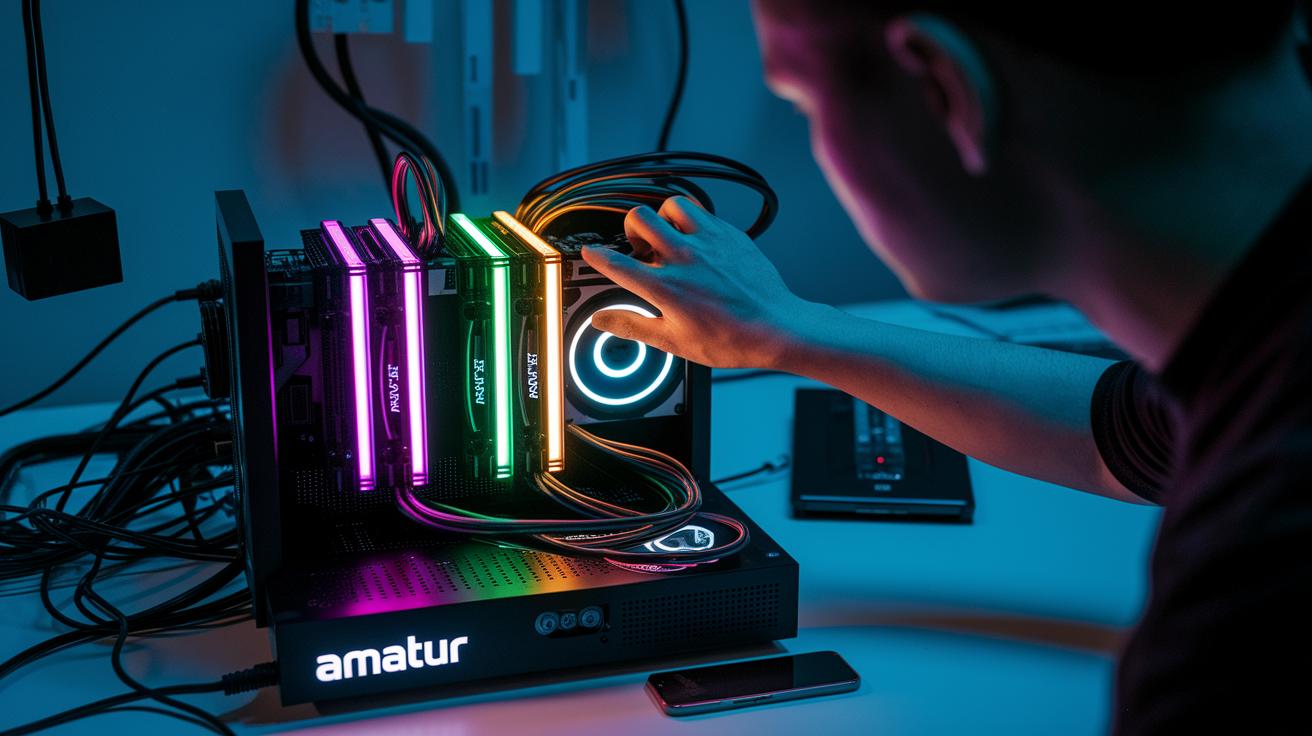
Running your own mining gear gives you full control over the setup and how things perform. For instance, GPU rigs cost around $1,000 to $2,000 per card and can offer different processing speeds depending on how they're arranged. ASIC miners, on the other hand, start at $10,000 or more and are very efficient for SHA-256 coins. Sure, managing your own equipment means you’re in charge of everything, from keeping the hardware in shape to managing energy costs. It’s a challenge, but it also gives you the freedom to fine-tune things just the way you want.
Cloud mining and browser-based crypto mining give you a hands-off alternative. With cloud mining, you subscribe to a service that handles the nitty-gritty for you. Many of these services even offer free trials to let you test the waters. Browser-based mining, which uses in-browser JavaScript, usually brings in smaller rewards and can slow down your browser. While these methods lower your initial investment, they come with less control over performance and may not be as reliable over the long haul.
| Solution | Investment Cost | Performance & Maintenance |
|---|---|---|
| GPU Rig | $1,000–$2,000 per card | Fluctuating performance; you manage the upkeep |
| ASIC Miner | $10,000+ | High efficiency; requires regular technical care |
| Cloud-Mining Service | Subscription-based | Service handled; less control over hardware |
In the end, you need to balance startup costs with the ongoing work required for performance and maintenance. Finding that sweet spot is key to a profitable online crypto mining setup.
Profitability Analysis for Online Crypto Mining Investments
Calculating profit in crypto mining is a lot like putting together a careful budget. You have to balance the money you bring in with ongoing costs like the price of energy, the spread-out cost of your hardware (hardware amortization means spreading out the purchase cost over several years), and the fees charged by mining pools. For instance, if you spend on a GPU or an ASIC rig, you'll divide its price over its useful life, while electricity bills can be steep depending on your local rates. Even small pool fees can nibble away at your earnings. It’s much like managing a long-term project where every expense has its own line item.
Mining rewards are known to swing quite a bit, which makes it tough to count on a steady income. Just think about December 5, 2024: miners received 3.125 BTC, valued at roughly $315,625 when one Bitcoin was around $101,000. This goes to show how sharp price changes can seriously affect your take-home. Moreover, every 210,000 blocks, the system cuts your block rewards in half, a process known as halving, and the next one is expected in 2028. This means your revenue might shrink over time unless you ramp up your mining power. Keeping an eye on market trends and changes in hash rates through crypto technical analysis can help you adjust your strategy as needed.
Staying energy efficient is key to turning a profit in crypto mining. Investing in rigs that use less power, or even partnering with renewable energy suppliers, can dramatically lower that huge electricity bill. Plus, choosing the right mining pool and regularly maintaining your gear can reduce wasted energy and avoid downtime. In short, managing these factors well can boost your return on investment and help you build a setup that can better handle market ups and downs.
Security Measures and Risk Management in Online Crypto Mining

Keeping your crypto mining safe online is all about taking a few smart technical steps. Start by using a segmented network, a trustworthy VPN, and making sure your firmware is always up-to-date. Think of routine firmware updates like checking the locks on your door to keep unwanted visitors out.
When you look at rules around the world, it's important to know where you're mining. In some areas like China, mining isn’t allowed at all, while in places such as Iran, strict rules help prevent too much strain on the power grid. Always be careful of scams, steer clear of sites that promise guaranteed returns or have vague details about their mining gear. It’s a good idea to do a little research on these sites, checking their history and watching out for any hidden practices. Also, remember that even though some transactions are anonymous, trading coins on platforms that ask for identity checks could reveal your personal details.
By mixing smart tech habits with a careful look at legal and reputation checks, you can keep your mining setup more secure and reduce risks.
Top Mining Software and Pool Strategies for Online Crypto Mining
Online crypto mining software is like the cockpit for your mining equipment. It connects your hardware to mining pools and lets you control everything with ease. You can check your system’s performance, adjust settings, and even switch to a more profitable coin as market trends change. Fun fact: Back in 2011, savvy miners kicked things off by using command line tools like CGMiner to speed up their work and cut out guesswork.
CGMiner made its debut in 2011 with a strong command line interface and support for various algorithms (these are the math puzzles that secure transactions), which made it a hit with experienced users. Then in 2012, BFGMiner arrived, packing cool features like dynamic clocking and per-rig monitoring. This modular design means you get real-time updates on your hardware, which is handy if you like to keep a close eye on your setup. Later on, MultiMiner entered the scene with an easy-to-use graphical interface that doesn’t require coding skills, and it even switches coins automatically to help optimize your returns. Whether you’re comfortable with technical details or looking for simplicity, these tools have you covered.
Awesome Miner, launched in 2014, offers a centralized dashboard where you can manage several rigs and pool activities in one spot. This streamlined approach makes handling larger operations much more manageable. Meanwhile, EasyMiner is all about keeping things user-friendly, supporting both GPU and CPU mining so that anyone testing the waters can get started quickly. Each software solution brings its own unique strength, making it easier for you to find a match based on your experience and needs.
Pooling your mining power smartly with the right software settings is key to getting the most out of your efforts. By entering your pool credentials into these programs, you’re quickly linked to established mining communities. And with automated crypto mining bots fine-tuning strategies based on real-time performance data, you can keep your mining operations both efficient and profitable.
Regulatory Updates and Future Trends in Online Crypto Mining

Crypto mining rules around the world are evolving. Countries are updating guidelines to protect energy use and keep networks secure. In some regions, rules are pretty strict, while in others, there’s more room for creative, decentralized approaches. People are chatting about whether Proof-of-Work (a method that secures the network by solving puzzles) or Proof-of-Stake (a system that secures the network by relying on coin holdings) is the better choice for security and the environment. Liquid mining and models that blend ideas from decentralized finance (DeFi) are drawing attention by offering more flexible ways to participate. For example, many networks are moving to Proof-of-Stake to lower energy consumption and attract eco-conscious miners.
New mining technologies are also changing the game. Developers are rolling out fresh wallet tools and decentralized dashboards to help manage on-chain activities more smoothly. This update makes running mining operations simpler and fits well with the trend toward openness and less reliance on central systems. And yes, many experts are now exploring hybrid mining models that mix technical efficiency with easy-to-use interfaces and secure ways to track transactions.
There’s a big push for sustainability too. Renewable-powered data centers and carbon offset programs are becoming common themes in new projects. These eco-friendly mining ideas show how seriously the industry takes environmental concerns. As legal frameworks evolve and fresh technology comes to light, online crypto mining is set to grow in a way that meets tomorrow’s green standards.
Final Words
In the action, we explored the nuts and bolts of online crypto mining, from setting up essential hardware and software to comparing mining platforms and assessing profitability factors. We looked at risk management practices and even discussed future regulations and innovative software tools that keep the field exciting yet challenging.
Armed with these insights, you'll feel more confident about making clear, informed decisions in your mining projects. Every piece of data helps cut through the noise and lights up opportunities ahead.
FAQ
What does online crypto mining free mean?
Online crypto mining free refers to mining cryptocurrency using platforms or apps that claim no upfront cost. It typically involves earning a small amount of crypto without any initial hardware or software investment.
What are online crypto mining sites and how do they work?
Online crypto mining sites are web platforms that let users contribute computing power to the mining process. They connect your device to a mining pool, where you share rewards as part of the mining effort.
How do online crypto mining apps function?
Online crypto mining apps work by using your smartphone or tablet to perform mining tasks. They simplify the process, enabling you to earn crypto by utilizing your device’s processing power with minimal technical setup.
What is an online crypto mining rig?
An online crypto mining rig is a dedicated computer or set of computers optimized for cryptocurrency mining. It combines specialized hardware and software to run mining algorithms efficiently, contributing to transaction verification on the blockchain.
How does Bitcoin mining software work?
Bitcoin mining software manages the process of verifying transactions by solving mathematical puzzles. It directs your device’s processor to compute hashes, ensuring blockchain security and ultimately adding the new blocks of Bitcoin transactions.
Are there free Bitcoin mining sites without investment?
Free Bitcoin mining sites without investment offer a way to mine small amounts of Bitcoin using demo modes or limited services. They usually yield modest rewards and serve as an introductory experience to mining without a financial commitment.
Can you mine crypto online using just an internet connection?
Mining crypto online using an internet connection is possible because it relies on networking to access mining pools and platforms. The mining process occurs on your local device or via the cloud while the internet connects you to the network.
How long does it take to mine $1 of Bitcoin?
Mining $1 of Bitcoin depends on your hardware’s efficiency, current network difficulty, and power costs. Generally, it requires substantial computational work, making the process longer for small yield rewards compared to large-scale operations.
What roles do NiceHash, Binance, Coinbase, Genesis Mining, Bitmain, and Pi play in crypto mining?
These names represent notable platforms and hardware brands in crypto mining. They range from mining marketplaces like NiceHash and Genesis Mining to hardware providers like Bitmain, as well as exchange platforms such as Binance and Coinbase, each contributing uniquely to the mining ecosystem.


