
Ever notice how altcoin prices move like a seesaw on a playground? Even a small hint in market chatter can send them soaring one moment and tumbling the next, leaving many investors a bit surprised.
We take a close look at why these digital assets react so fast. Changes in available money (liquidity), investor moods (sentiment), and tech updates all mix together to create a quick, pulsing beat beneath altcoin values.
Stick with us, and you might find that understanding these factors can change how you see the altcoin market.
Key Drivers in Altcoin Price Sensitivity
Altcoins usually react fast when market conditions change because they have smaller market sizes and less dense order books. Even a single large transaction can push their prices sharply up or down. Bitcoin, on the other hand, stays more stable due to its deep liquidity and well-established market position.
Altcoin prices tend to bend quickly with a mix of factors. Imagine hearing really good news, altcoin values can shoot up almost instantly. But if the news turns sour, prices might drop just as quickly. This speedy change is also linked to updates in technology and shifts in market rules, making it a fascinating time to watch these digital assets closely.
Here are the main factors that drive these price changes:
| Key Factor |
|---|
| Market liquidity and capitalization |
| Market sentiment shifts |
| Regulatory changes |
| Technological innovations |
| Differences in market maturity |
Think of each of these elements as a building block that shapes altcoin behavior. For instance, a drop in liquidity might make prices jump more with each trade, while stronger regulatory support could ease volatility. It’s a unique blend that sets altcoins apart, offering insights into their distinct and sometimes unpredictable movements.
Historical Liquidity & Maturity Impacts on Altcoin Price Sensitivity

Since 2015, altcoins have grown from a few experimental tokens into a lively market where trading happens every day. Over time, changes in rules and major updates have really shifted how investors act. In early 2018, for example, a strict regulatory move widened bid-ask spreads by 35% on some tokens. One analyst even remarked how a big regulatory change led to a sudden drop in altcoin liquidity, showing just how quickly investor confidence can swing.
| Factor | Bitcoin vs Altcoins | Impact on Sensitivity |
|---|---|---|
| Market Cap | Bitcoin’s much bigger market cap brings more stability | Altcoins tend to see larger price moves |
| Liquidity | Bitcoin enjoys deeper liquidity pools | Altcoins show wider bid-ask spreads and react quicker |
| Maturity | Bitcoin’s longer history means more predictable movements | Newer tokens are more volatile during market stress |
Looking back, moments like regulatory shifts and bursts of investor activity have reshaped how volatile altcoins can be. Data from fast-changing market periods makes it clear: when liquidity is low and tokens are still young, altcoin prices swing dramatically. It’s a clear reminder of how past events continue to mold the unique dynamics and sensitivities we see in today’s altcoin market.
Quantitative Metrics & Models for Altcoin Price Sensitivity
The crypto world moves fast, and keeping up means using simple tools to spot changes. We often start with measures like standard deviation, a basic way to see how far prices drift from their norm. Then there’s historical volatility that tells us about past ups and downs. On top of that, more advanced ideas like implied volatility (which comes from option prices) give a peek into future moves. Altogether, these methods let us gauge market mood and compare how sensitive different altcoins are to shifts.
Volatility Measurement Techniques
Standard deviation is our go-to for checking how much an altcoin’s price swings relative to its average. More advanced models, like GARCH, dig into how volatility might change over time, catching sudden bursts of risk. And when we look at implied volatility, we’re using option pricing to make educated guesses about future price moves. Many traders use these ideas alongside technical analysis tools to build well-rounded strategies that are both simple and deep.
Sensitivity Coefficient Derivation
To figure out how much an altcoin’s price moves with market trends, we lean on regression analysis. By crunching numbers through multiple regression tests, we get a sensitivity coefficient, a clear number that shows how price shifts in response to factors like liquidity or investor mood. This method gives a straightforward, data-driven view of how external influences drive price changes in the market.
Impulse Response Functions
Impulse response functions, often calculated with VAR models (vector autoregression), help us see the ripple effects of a sudden change. Picture it like a stone causing waves in a pond, a quick news alert or a policy update can send shockwaves through altcoin prices. The choice of model really depends on how often the data is gathered. For infrequent data, simpler techniques might do the job, while high-frequency data might need more advanced econometric models to capture every little detail.
Non-Linear Responses & Outlier Detection in Altcoin Price Sensitivity
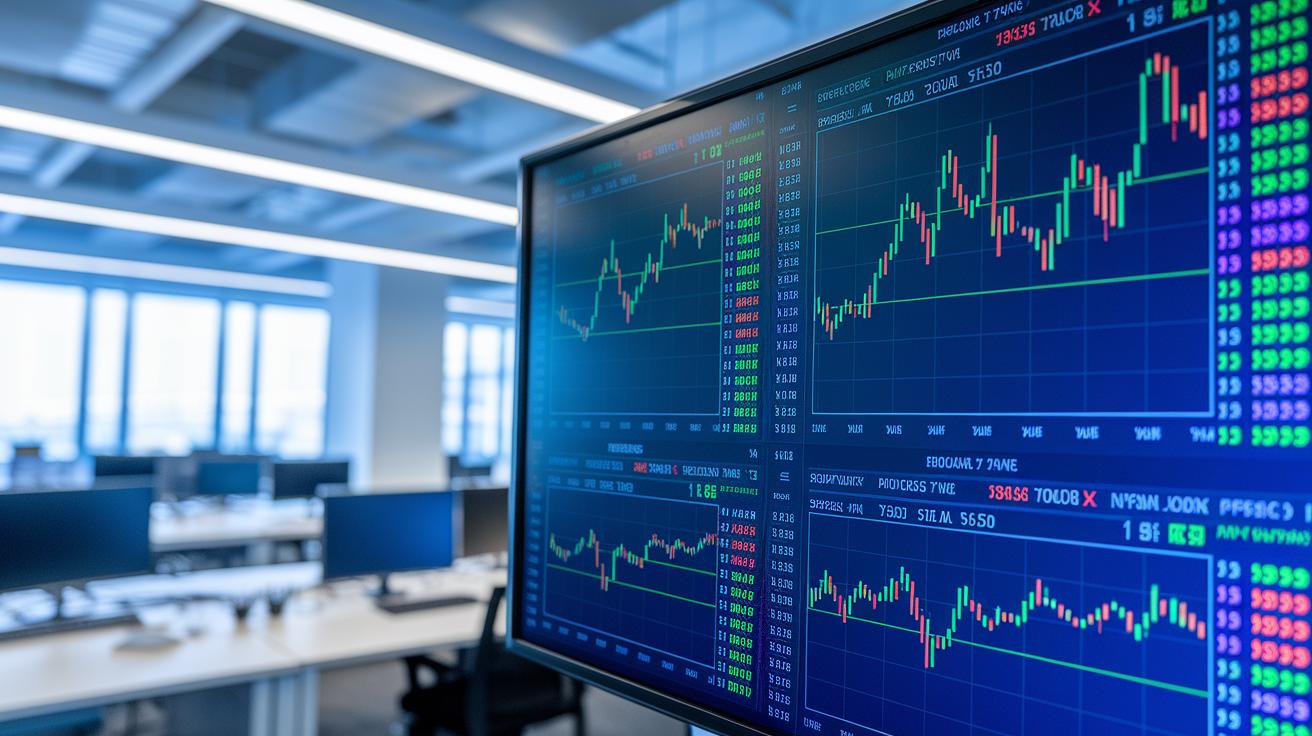
Traditional linear models often don't capture the full story of altcoin price changes. They assume a steady link between factors, so they can miss those sudden jumps and odd shifts that really shake things up. This makes it hard to see how extreme events or market shocks tweak price sensitivity, especially when the market gets really choppy.
Non-Linear Regression Models
Models like polynomial, spline, and kernel methods take a different route. They let the curves in your data twist and turn as market behavior changes. In plain speak, they adjust smoothly to shifts in investor mood that linear models might overlook. For example, a polynomial model might show you a sharp price jump as trading volume rises, while spline functions ease you through transitions from one market phase to another. It’s a bit like watching a river meander, sometimes calm, sometimes roaring.
Volatility Clustering & Outliers
Tools like threshold models and jump detection techniques help spot those moments when price moves stray far from the usual path. They zero in on clusters of wild swings and unexpected changes, giving a clearer look at rare events and tail-end risks. Simply put, non-linear approaches do a better job at highlighting those big, sudden shifts in the market.
altcoin price sensitivity analysis: Fresh market pulse
Altcoin price sensitivity metrics show the risks that come with investing in digital assets. When prices swing fast, often because of low liquidity or new rules, sensitivity analysis becomes a key tool to manage those risks. By watching these numbers, investors can spot potential weak spots and craft strategies that quickly adapt when markets shift. It’s a smart move, especially when uncertainty makes price jumps even bigger and spreading risk across different assets becomes a must.
- Dynamic position sizing based on different volatility levels
- Hedging across assets, like using derivatives tied to BTC
- Stop-loss levels set by volatility
- Algorithmic stop orders with triggers that adjust automatically
- Spreading investment across both high- and low-cap tokens (investment portfolio management)
Take a closer look at these strategies: dynamic position sizing means you adjust how much you invest as market shakiness changes, while cross-asset hedging helps cushion a slump in one area by leaning on strength in another. Volatility-based stop-loss orders and smart algorithmic stops team up to keep potential losses in check, especially when the market takes swift turns.
Mixing forecasts based on economic data with machine learning predictions further sharpens planning for different scenarios. This combo gives a full picture by blending past trends with fresh, predictive insights, helping investors fine-tune their risk game in real time and keep their portfolios strong even in wild, fast-moving markets.
Comparative Case Studies in Altcoin Price Sensitivity

When we look at altcoins and how their prices change, we often see that tokens of different sizes react differently to shifts in trading volume. Ethereum is a well-known example, it has so much activity and money that its price tends to stay fairly steady. Cardano, which sits in the middle in terms of market size, shows a mix of steady behavior and occasional quick swings. And then there’s Polkadot, a smaller token that can bounce around more dramatically when trading activity changes. In simple terms, these tokens give us clear clues about how factors like liquidity (how easy it is to buy or sell), what investors are feeling, and overall market behavior work together to affect prices. Ever notice how even a small change in trading volume can move the price of a smaller token much more than a big one like Ethereum?
| Altcoin | Sensitivity Coefficient | Trading Volume Correlation | Price Impact per 1% Volume Change |
|---|---|---|---|
| Ethereum | Low | Moderate | Minimal |
| Cardano | Medium | High | Noticeable |
| Polkadot | High | Very High | Significant |
These examples really show us that differences in sensitivity and trading activity are key to understanding market trends. Whether you’re diving into big tokens like Ethereum or exploring smaller players such as Polkadot, these insights can help guide your investment decisions.
Final Words
In the action, we examined the pulse of altcoin price sensitivity by breaking down market liquidity, sentiment shifts, regulatory changes, tech innovations, and maturity differences. We uncovered how historical liquidity impacts, quantitative metrics, and non-linear approaches paint a clearer picture of altcoin volatility.
This post reinforces the value of altcoin price sensitivity analysis as a tool to interpret market shifts. The insights shared here offer solid guidance to navigate the ups and downs of alternative coin trading, leaving us with optimism for smarter investment moves ahead.
FAQ
What resources are available for altcoin price sensitivity analysis on Reddit, in PDFs, or charts from recent years?
Altcoin price sensitivity analysis is available on Reddit discussions, detailed PDF reports, and interactive charts from 2021 and 2022, offering diverse views on how these coins respond to market events.
What is the best crypto price analysis?
The best crypto price analysis blends technical charts with statistical models and clear data insights, helping investors quickly understand trend shifts and make informed decisions.
How do you analyze altcoins?
Analyzing altcoins involves checking liquidity, market sentiment, regulatory news, and tech updates. It uses data-driven tools like volatility metrics and regression models to assess price sensitivity compared to Bitcoin.
Do altcoins lag behind Bitcoin?
Altcoins often react more dramatically due to smaller market caps and lower liquidity. While they usually mirror Bitcoin’s trends, their price swings can be faster and more pronounced during market shifts.
What affects the price of altcoins?
Altcoin prices react to market liquidity levels, sentiment shifts, regulatory changes, technological innovations, and differences in market maturity, all of which can trigger rapid price movements.


