
Have you ever wondered if your online bank account is safe? Cryptography, the art of using secret codes, secures blockchain transactions by locking and unlocking them like a set of trusted door locks. Each step in the blockchain uses these secret codes to keep your data out of reach for cyber attackers, think of it as having multiple keys to safeguard your home.
In today’s digital world, data breaches are always a concern. These secret codes ensure that your information stays exactly as it should, building trust in every transaction. Let’s take a closer look at how these security tools work together to create a safer financial space.
Key Cryptographic Methods Securing Blockchain Systems
Cryptography is the heart of blockchain security. It keeps transactions safe, private, and sound, much like a personal safe that only opens when you punch in the right code. Think of it as sharing a secret message, only someone with the secret code can truly understand it.
Every day, cryptographic tools protect not just our small transactions but also massive collections of digital records. They add layers of protection that block unwanted access and make any tampering immediately obvious. It’s a bit like having several locks on your door; if someone tries to break in, you’ll know right away.
Let’s break down how this works:
- Symmetric-key cryptography: This method uses one shared secret for both locking and unlocking data. It’s super fast and perfect for transferring large amounts of information securely.
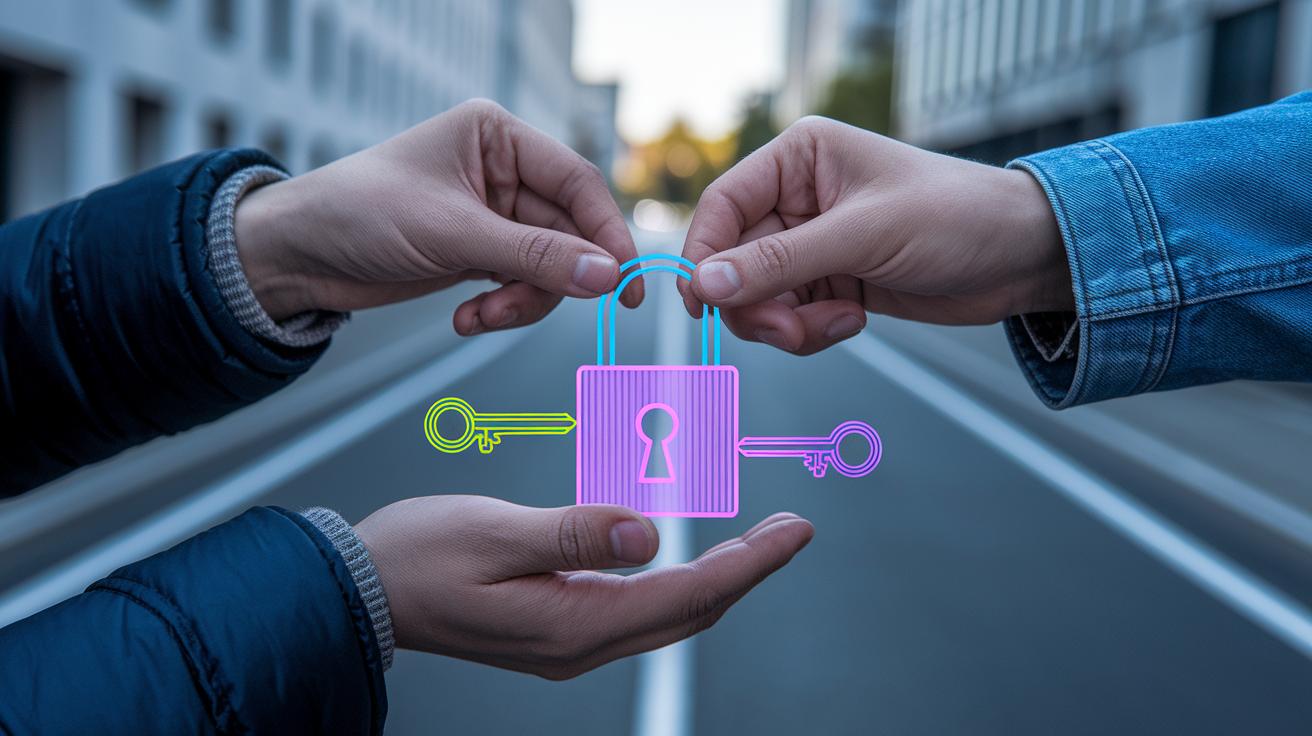
- Asymmetric-key cryptography: Here, you have a public key to lock (or encrypt) the data and a private key to unlock it. This way, only the person meant to see the message can actually read it.
- Secure hash functions: These take data and turn it into a fixed, unique fingerprint. This helps ensure the data stays true to its original form, much like a digital seal of approval that shows if anything has been changed.
When you combine these methods, you create a really strong level of security for blockchain networks. The symmetric method handles large volumes of data well, while the asymmetric approach provides a safe way to share sensitive details. And hashing? That links everything together, making sure any change in the chain is spotted right away. In simple terms, it’s like having a multi-layered security system that makes every transaction safe and tamper-proof.
Role of Secure Hash Algorithms in Blockchain Data Integrity
Secure hash algorithms help keep blockchain data safe by acting like a quick check to see if anything has been changed. They build on basic cryptographic methods by turning each block's data into a fixed-length string that also includes part of the previous block's string. Even one tiny change, like a single altered letter, completely changes this result. Imagine writing your name and suddenly having it turned into a jumbled word, that's how sensitive these algorithms are.
When a block is added, its data is converted into this fixed string. Changing even one small piece causes the whole string to shift, so you can quickly spot tampering. It’s a bit like how a slight change in a recipe can make an entirely different dish. Have you ever noticed how one small ingredient can change the whole flavor?
Early on, some hash methods ran into issues like collision attacks, where different data accidentally produced the same result. These problems pushed experts to develop stronger, more reliable algorithms. Now, these advanced techniques catch any sneaky alterations right away before they can disrupt the trust in the whole system. It’s like upgrading from a basic lock to a high-tech security system.
Public-Key Encryption and Digital Signatures Protecting Transactions
Public-key encryption and digital signatures team up to keep transactions secure. They verify who you are and protect sensitive data so that only the right eyes see it. This clever system uses a pair of keys: one public key that anyone can use to lock (encrypt) a message, and one private key that only the intended recipient holds to unlock (decrypt) it. Imagine sending a locked box that only your friend can open, one company did just that, keeping their secrets safely under wraps. This approach not only makes your digital interactions safe but also builds trust with every transaction.
Public-key encryption works by having a public key available for encrypting messages or checking a signature, while the private key is reserved for decrypting or signing. In simple terms, if you encrypt your data with a public key, only the matching private key can unlock it. Think of it like locking your diary with a unique padlock, the padlock (public key) might be seen by everyone, but only you hold the key (private key). This dual-key method helps ensure that unauthorized people can’t access what’s meant to be private.
On the flip side, digital signatures show exactly who sent a transaction. They’re created using the sender’s private key and then verified with the sender’s public key. It’s a bit like a handwritten signature on a document, only you could have signed it, so everyone knows that the message is really from you and hasn’t been tampered with.
Consensus Protocols: Cryptographic Safeguards in PoW and PoS

Proof-of-Work is a system where computers solve tricky puzzles to add blocks to the blockchain. Each computer races to create a unique digital fingerprint, or hash, that directly connects to the previous block’s fingerprint. This linking makes it tough to tamper with any part of the chain because changing one block means re-solving every puzzle that comes after. It’s kind of like trying to crack a series of safe locks where each lock makes the next one even harder to break. In this friendly yet robust setup, a majority of miners working together help keep the ledger both secure and trustworthy.
Proof-of-Stake shifts how security works by focusing on what participants have at stake. Here, validators are picked based on the digital assets they commit; these assets act like a security deposit to deter cheating. When you risk losing something valuable, you’re much more likely to play fair, just like you wouldn’t damage a borrowed item if you had a deposit on the line. This system uses the idea of trust backed by actual risk rather than just computational might. Both Proof-of-Work and Proof-of-Stake use clever cryptography to verify transactions, but they get there in very different ways: one by using powerful computations and the other by offering financial incentives to stay honest.
| Protocol | Mechanism | Security Features |
|---|---|---|
| Proof-of-Work | Solving tough puzzles | Shared computation makes altering the ledger nearly impossible |
| Proof-of-Stake | Staking digital assets as collateral | Financial incentives encourage honest behavior |
Advanced Cryptographic Techniques: Multi-Signatures to Threshold Schemes
Multi-signature schemes add another layer of safety for blockchain transactions by making sure more than one private key is needed to approve an action. In simple terms, instead of one person or key saying "yes," several must agree before anything goes through. For instance, think of a transaction that needs nods from three different keys. This extra check helps keep bad actors at bay.
Multi-Signature Schemes
With multi-signature setups, you need a few different private keys to give the green light on a transaction. It’s like requiring several friends to sign off before you make an important decision. This collaborative check cuts down on the risks of someone sneaking in unauthorized actions.
Zero-Knowledge Proofs
Zero-knowledge proofs let one person prove that something is true without giving away all the details behind it. Imagine saying, "I have enough money," without showing your bank balance. This method confirms that data or a transaction is solid, while keeping the sensitive parts secret.
Homomorphic Encryption
Homomorphic encryption is like doing math on a locked box of data without having to open it. You can run computations on encrypted (or hidden) data and still get the right results. It’s a clever way to work with private information safely during processing.
Threshold Cryptography
Threshold cryptography splits a private key into shares held by different people, and only a set number of these shares can unlock a transaction. Picture a safe that requires several different codes from trusted individuals before it opens. This way, even if one piece of the puzzle gets compromised, the whole system stays secure.
Together, these techniques build a strong shield for blockchain networks. They layer in extra checkpoints, keep sensitive data private while still allowing work to be done, and require teamwork to get things moving. It’s a smart, multi-layered approach to making sure your digital transactions stay safe and sound.
Key Management, Randomness and Scalability in Blockchain Cryptography

Effective key management starts with creating private keys using reliable random number generators. These secure generators make sure that keys aren’t weak or predictable, protecting your digital assets from risk. Spread your keys out across different secure spots, just like you’d share a secret recipe with several trusted cooks instead of relying on one pantry. This careful distribution limits damage if one location gets compromised. Plus, managing keys from creation to safe storage helps keep everything running smoothly.
Randomness is also key. When cryptographic algorithms generate truly random values, each key or nonce becomes one-of-a-kind, much like flipping a fair coin where every toss stands alone. And as your system grows, scalable encryption architectures step in to handle more data and transactions without slowing down. This balance of robust security and efficient performance builds a resilient network for all your operations.
Addressing Vulnerabilities and Future Trends in Blockchain Cryptography
Blockchain networks are not without their issues. Sometimes, a few main nodes (the computers that help run the network) take control, and smart contracts, those self-running programs, can have mistakes. These problems can put a decentralized system at risk, meaning it might not stay as fair and open as we hope. Research into distributed ledger security challenges shows that these weaknesses need constant, careful attention.
By mixing strong crypto tools (fancy techniques for keeping data safe) with smart ways to agree on things (consensus protocols, which help the network decide what’s true), blockchains can stand up better against attacks and new dangers. This forward-thinking approach is key to keeping our data intact and private while making sure the system stays open and can't be easily manipulated.
- Focus on boosting the randomness in key generation so that outcomes don’t become predictable.
- Move toward sharing control across many players rather than letting dominant nodes call the shots.
- Improve the ways we check smart contracts so we can catch and fix errors overnight.
It’s clear that keeping up with better encryption methods for protecting the ledger and solving encryption issues is a must if we want to secure blockchain setups. As we see fresh challenges come up, continuously tweaking these methods and keeping a close eye on smart contract security and randomness will help lower risks. In truth, adapting to new threats with evolving encryption strategies makes sure that blockchain systems stay resilient and trustworthy, even when the security landscape shifts under our feet.
Final Words
In the action, we explored key cryptographic methods that secure blockchain ledgers, from symmetric and asymmetric systems to secure hash functions that maintain data integrity.
We broke down the roles of public-key encryption, digital signatures, and consensus protocols, and touched on advanced ideas like multi-signature schemes and threshold cryptography.
Together, these methods build a strong foundation for robust blockchain protection. Our discussion shows that reliable insights and cryptographic techniques in blockchain security can truly empower safer investment decisions.
FAQ
Frequently Asked Questions
What are cryptographic techniques in blockchain security?
The cryptographic techniques in blockchain security include symmetric-key and asymmetric-key encryption, secure hash functions, and digital signatures. These methods protect transaction integrity and prevent unauthorized changes.
What does a blockchain cryptography PDF usually cover?
The blockchain cryptography PDF typically explains how encryption methods, hash functions, and digital signatures work together to secure transactions and maintain trust on decentralized ledgers.
What is blockchain?
The term blockchain refers to a secure, distributed ledger that records transactions using cryptography. It links blocks of data in a way that makes tampering easily detectable, ensuring data remains unaltered.
What role does cryptography play in blockchain security?
The role of cryptography in blockchain security is to protect transactions and data. It achieves this by using encryption, digital signatures, and hash functions to verify authenticity and prevent tampering.
Which cryptographic technique ensures data integrity on the blockchain?
The secure hash function is the cryptographic technique that ensures data integrity. It converts block data into a unique fixed-length output, making any alteration detectable.
How do platforms like Ethereum, Ledger, and Coinbase use cryptography?
The mention of Ethereum, Ledger, and Coinbase highlights that these platforms use robust cryptographic measures such as encryption, digital signatures, and hashing to secure user transactions and data.
What are the key cryptographic techniques used in information security?
The key cryptographic techniques include symmetric and asymmetric encryption, secure hash functions, and digital signatures. They work together to maintain data confidentiality, integrity, and authenticity in various security applications.


